 By Hamza
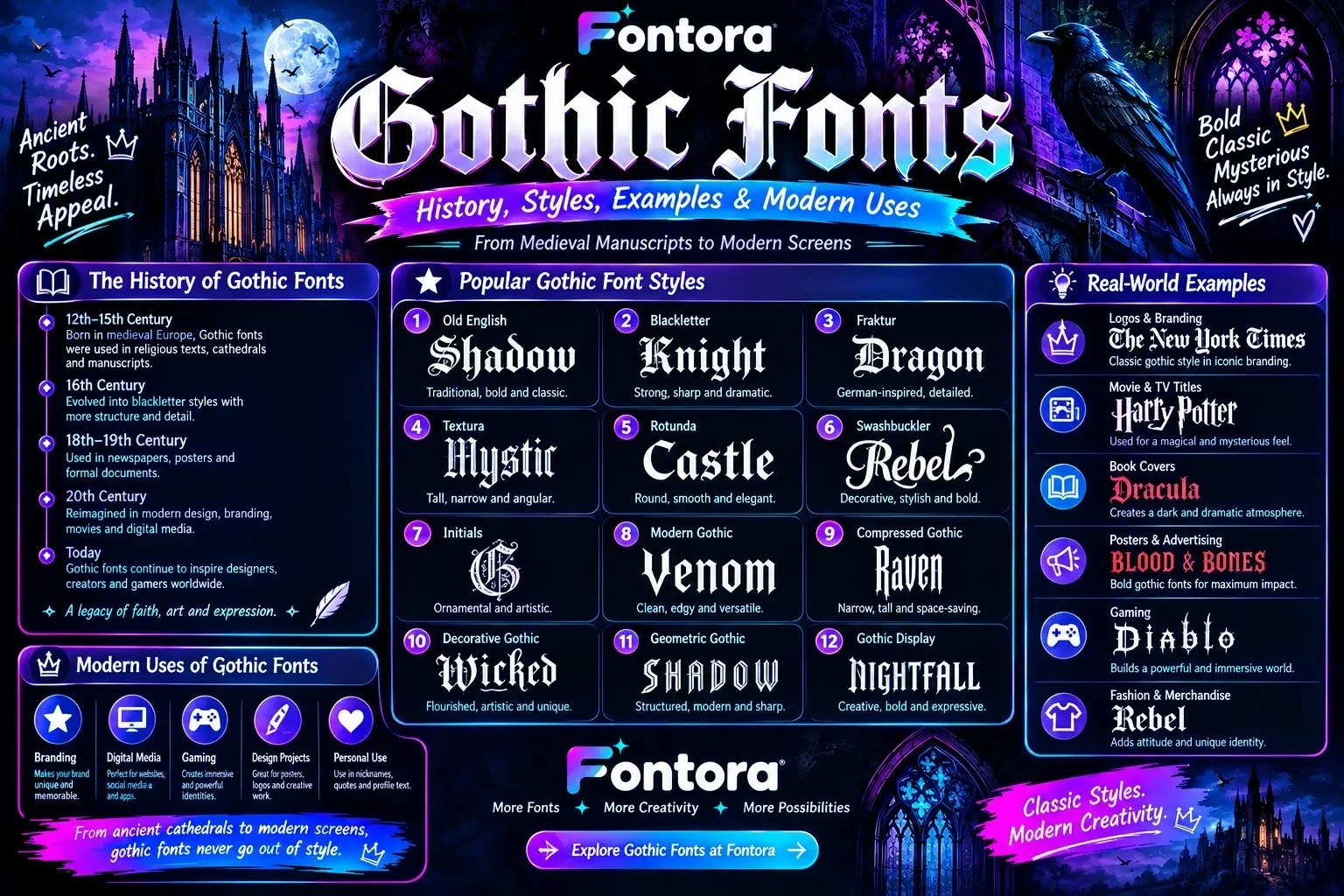
Gothic fonts are a typography style inspired by medieval European handwriting and blackletter scripts. They feature bold strokes, sharp edges, and decorative letter designs that create a dramatic and artistic appearance. Gothic fonts are commonly used in logos, gaming names, tattoos, music artwork, branding, and creative digital designs.
Gothic Fonts: History, Styles, Examples, and Modern Uses
Introduction
Gothic fonts are a powerful typography style inspired by medieval lettering, traditional blackletter scripts, and historic European writing. Designers, brands, gamers, and creators use gothic typography to create bold, mysterious, and memorable visual identities across logos, gaming profiles, tattoos, music artwork, and digital content.
With their sharp edges, dramatic strokes, and artistic details, gothic fonts create a unique connection between historical design and modern creativity. From classic medieval manuscripts to contemporary branding and online profiles, gothic lettering continues to influence visual communication.
In this complete guide, you will explore the history of gothic fonts, different gothic styles, examples, common uses, and how to create stylish gothic text for your own creative projects.
What Are Gothic Fonts?
Gothic fonts are a category of typography that originated from historical European writing styles known as blackletter or Gothic script. These fonts are recognised by their dark appearance, detailed letter structures, and strong visual presence.
Unlike modern clean fonts, gothic typography focuses on artistic expression and character. The letters often include:
Sharp angles
Thick and thin strokes
Decorative elements
Complex letter shapes
Strong visual contrast
Because of these unique features, gothic fonts create a powerful and memorable appearance.
Understanding Gothic Typography
Gothic typography is a design style that connects historical lettering with modern visual communication. It is often associated with medieval manuscripts, traditional craftsmanship, and artistic expression.
Today, gothic fonts are used beyond historical documents. Designers adapt gothic lettering for brand identities, gaming communities, fashion designs, tattoo artwork, music graphics, and social media profiles.
Modern gothic typography combines traditional inspiration with contemporary design needs.
Gothic Fonts vs Blackletter Fonts
The terms gothic fonts and blackletter fonts are often used together because they share similar origins.
Gothic Fonts
Gothic fonts refer to the broader category of typography styles inspired by medieval and dramatic lettering.
They can include:
Traditional gothic styles
Modern gothic designs
Decorative gothic typography
Blackletter Fonts
Blackletter fonts are a specific historical style of gothic writing that developed in medieval Europe.
They are known for:
Dense letter structures
Narrow spacing
Strong vertical strokes
Manuscript-inspired designs
In simple terms:
Blackletter is one type of gothic typography, while gothic fonts include a wider range of related styles.
Main Characteristics Of Gothic Fonts
Gothic fonts have several unique features that make them different from standard typography.
Bold And Dramatic Appearance
Gothic fonts usually have strong visual weight, making them stand out in designs.
They are often used when a creator wants to communicate:
Power
Mystery
Strength
Tradition
Decorative Letter Shapes
Many gothic fonts include artistic details such as:
Extended strokes
Curved endings
Decorative lines
Unique character designs
These details create a handcrafted and artistic feeling.
Historical Influence
Gothic typography is strongly connected with medieval European culture and traditional writing methods.
This historical connection gives gothic fonts a timeless and classic appearance.
Why Are Gothic Fonts Popular?
Gothic fonts remain popular because they create a strong visual identity that is difficult to achieve with simple typography.
They are often chosen because they feel:
Unique
Powerful
Artistic
Memorable
Expressive
Creators use gothic styles when they want their designs to feel different from ordinary modern fonts.
For example:
Normal:
Dark Warrior
Gothic style:
𝕯𝖆𝖗𝖐 𝖂𝖆𝖗𝖗𝖎𝖔𝖗
The gothic version creates a stronger and more dramatic impression.
Modern Use Of Gothic Typography
Although gothic fonts started as historical writing styles, they are still widely used in modern creative industries.
Common modern applications include:
Gaming usernames
Streetwear brands
Music album covers
Tattoo designs
Event posters
Digital artwork
Their ability to combine history, creativity, and visual impact makes them valuable in modern design.
Understanding gothic fonts helps designers choose typography that communicates a bold and distinctive message. Whether used for branding, gaming, artwork, or digital content, gothic typography continues to provide a powerful way to express creativity and identity.
History Of Gothic Fonts
The history of gothic fonts is deeply connected with medieval European culture, handwritten manuscripts, and the development of early printing technology. What started as a practical writing style for books and religious texts later became a powerful design element used in modern branding, gaming, fashion, and digital creativity.
Gothic typography represents a connection between historical craftsmanship and modern visual expression.
Gothic Fonts In Medieval Europe
Gothic fonts originated in Europe during the 12th century and became widely popular during the Middle Ages. At that time, handwritten books were created by skilled scribes who manually copied religious texts, literature, and important documents.
The writing style that developed during this period became known as Gothic script or blackletter.
The main reasons for its popularity were:
Efficient use of writing space
Faster manuscript production
Strong visual appearance
Formal and authoritative look
Because parchment was expensive, scribes developed narrow and compact letters that allowed more text to fit on each page.
Gothic Fonts And Medieval Manuscripts
Before modern printing existed, books were written by hand. Monks and professional scribes created detailed manuscripts using ink and specialised writing tools.
Gothic lettering became especially common in:
Religious manuscripts
Legal documents
Academic texts
Historical records
These manuscripts often featured:
Thick black strokes
Detailed decorative letters
Dense text arrangements
Artistic illustrations
The combination of gothic lettering and detailed artwork made medieval manuscripts valuable examples of early typography.
The Development Of Blackletter Typography
Blackletter became one of the most recognisable forms of gothic writing. It was named because the dense arrangement of dark strokes created a strong black appearance on the page.
Different regions developed their own variations of blackletter, including:
Textura
Rotunda
Schwabacher
Fraktur
Each style had different characteristics, but they shared common features such as:
Angular letter shapes
Narrow spacing
Heavy strokes
Decorative details
Gothic Fonts And The Printing Press
The invention of the printing press in the 15th century changed the history of typography. When Johannes Gutenberg created his printing system, early printed books used blackletter-style typefaces.
One of the most famous examples is the Gutenberg Bible, which used a blackletter-inspired type style.
During this period, gothic fonts became associated with:
Books
Education
Religion
Official documents
The printing press helped gothic typography spread across Europe and established it as one of the earliest major printed type styles.
Decline Of Gothic Fonts In Everyday Writing
Over time, simpler typefaces such as serif fonts became more popular because they were easier to read and more practical for large amounts of text.
During the Renaissance period, many designers preferred cleaner typography inspired by classical Roman lettering.
Gothic fonts gradually moved away from everyday reading and became associated more with:
Historical documents
Traditional designs
Decorative purposes
However, gothic typography never completely disappeared.
Gothic Fonts In Modern Design
Today, gothic fonts have experienced a strong revival in creative industries. Designers use them not because they are traditional, but because they create a powerful visual identity.
Modern uses include:
Fashion And Streetwear
Gothic typography is popular in clothing brands because it creates a bold and rebellious appearance.
Common themes:
Alternative fashion
Luxury streetwear
Urban identity
Gaming Communities
Gamers often choose gothic fonts for usernames, clan names, and profiles because they communicate:
Strength
Mystery
Power
Dark aesthetics
Example:
𝕯𝖆𝖗𝖐 𝕷𝖊𝖌𝖊𝖓𝖉
Music And Entertainment
Gothic lettering is frequently used in:
Metal music branding
Album covers
Concert posters
Horror themes
The dramatic appearance helps communicate intense emotions and unique artistic styles.
Digital Branding
Modern brands use gothic-inspired typography to stand out from competitors.
Common industries:
Creative agencies
Tattoo studios
Gaming brands
Alternative lifestyle businesses
Why Gothic Fonts Continue To Survive
Gothic fonts have remained relevant for centuries because they offer something different from ordinary typography.
They combine:
Historical identity
Artistic creativity
Strong visual impact
Emotional expression
While modern fonts focus on simplicity and readability, gothic typography focuses on personality and character.
This makes gothic fonts valuable for designs that need to feel unique and memorable.
Gothic fonts have traveled from medieval manuscripts to modern digital platforms. Their journey shows how typography can evolve while preserving its historical identity. Today, gothic lettering continues to inspire designers, brands, and creators around the world.
Characteristics Of Gothic Typography
Gothic typography has a unique visual identity that separates it from modern font styles. Its dramatic appearance comes from specific design elements such as sharp edges, strong strokes, decorative details, and complex letter structures.
These characteristics make gothic fonts instantly recognisable and suitable for designs that require a bold, historical, or mysterious appearance.
Sharp And Angular Letter Shapes
One of the most noticeable features of gothic fonts is their sharp and angular letter design.
Unlike rounded modern fonts, gothic typography often uses:
Pointed edges
Straight lines
Sharp corners
Structured letter forms
These elements create a strong and powerful visual impression.
Example:
Normal:
Dark Style
Gothic style:
𝕯𝖆𝖗𝖐 𝕾𝖙𝖞𝖑𝖊
The sharp structure gives gothic lettering its classic medieval appearance.
Thick And Thin Stroke Contrast
Gothic fonts often use a combination of heavy and narrow strokes to create visual depth.
This contrast helps letters appear:
More dramatic
More artistic
More detailed
Thick strokes create strength, while thinner strokes add elegance and complexity.
This technique was originally developed by medieval scribes who used specific writing tools to create different stroke widths.
Dense And Compact Letter Structure
Traditional gothic fonts often have tightly packed letters with limited spacing.
This creates a dark and powerful appearance, which is why blackletter styles were given their name.
Characteristics include:
Narrow letter spacing
Compact designs
Strong visual weight
However, this density can sometimes reduce readability, especially in long paragraphs.
For this reason, modern designers usually use gothic fonts for:
Headlines
Logos
Short text
Decorative elements
Decorative Letter Details
Many gothic fonts include artistic details that make each character visually unique.
Common decorative elements include:
Extended lines
Curved endings
Flourishes
Additional strokes
Ornamental shapes
These details give gothic typography a handcrafted and artistic feeling.
They are especially useful in:
Tattoo designs
Brand logos
Posters
Artwork
Dramatic And Mysterious Appearance
Gothic typography is known for creating a strong emotional impact.
It often communicates feelings such as:
Mystery
Power
Tradition
Darkness
Strength
Because of this emotional effect, gothic fonts are popular in industries that want a bold identity.
Examples:
Gaming:
⚔️ 𝕯𝖆𝖗𝖐 𝖂𝖆𝖗𝖗𝖎𝖔𝖗
Music:
🎸 𝕳𝖊𝖆𝖛𝖞 𝕾𝖔𝖚𝖓𝖉
Fashion:
🖤 𝕬𝖑𝖙𝖊𝖗𝖓𝖆𝖙𝖎𝖛𝖊 𝕾𝖙𝖞𝖑𝖊
Historical And Medieval Influence
Gothic fonts carry a strong connection with medieval European writing traditions.
Their appearance often reminds people of:
Ancient manuscripts
Castles
Historical documents
Traditional craftsmanship
This historical association gives gothic typography a timeless and classic feeling.
Strong Visual Identity
Unlike simple fonts that focus mainly on readability, gothic fonts focus on personality and expression.
They help create designs that feel:
Unique
Memorable
Artistic
Different
This is why many modern creators choose gothic fonts when they want their designs to stand apart.
Readability Considerations
Although gothic fonts are visually attractive, they should be used carefully.
They work best for:
Logos
Titles
Short phrases
Decorative designs
They are usually not ideal for:
Long articles
Large paragraphs
Small text
A balanced design uses gothic typography for impact while using simple fonts for readable content.
Gothic Typography In Modern Design
Today, designers combine traditional gothic characteristics with modern design principles.
Modern gothic fonts may include:
Cleaner letter shapes
Improved readability
Digital-friendly designs
Contemporary styling
This allows gothic typography to remain useful in:
Branding
Websites
Gaming communities
Social media
Creative projects
Gothic typography stands out because of its powerful combination of history, artistic details, and dramatic visual style. Its sharp structures, bold strokes, and decorative elements make it one of the most recognisable and expressive font styles in modern design.
Different Types Of Gothic Fonts
Gothic fonts are not limited to one single style. Over centuries, different variations of gothic typography developed with unique characteristics, purposes, and visual appearances.
Some gothic styles are based on historical medieval writing, while others are modern adaptations created for branding, gaming, and digital designs.
The most popular types include blackletter fonts, Old English fonts, modern gothic fonts, and gothic calligraphy fonts.
Blackletter Fonts
Blackletter fonts are the original form of gothic typography and are strongly connected with medieval European manuscripts.
They are also known as:
Gothic script
Textura
Old-style gothic lettering
Blackletter fonts are recognised by:
Dense letter structures
Sharp angles
Heavy vertical strokes
Complex character designs
Example:
𝕭𝖑𝖆𝖈𝖐𝖑𝖊𝖙𝖙𝖊𝖗 𝕾𝖙𝖞𝖑𝖊
History Of Blackletter Fonts
Blackletter developed in medieval Europe when scribes needed a writing style that saved space while creating official-looking documents.
It was widely used for:
Religious books
Academic manuscripts
Legal documents
Early printed books
The style became one of the most recognisable writing systems before modern typography developed.
Modern Uses Of Blackletter Fonts
Today, blackletter fonts are commonly used in:
Tattoo designs
Music branding
Fashion logos
Gaming usernames
Historical designs
They create a feeling of:
Tradition
Strength
Mystery
Authenticity
Old English Fonts
Old English fonts are one of the most recognisable gothic styles. They are inspired by traditional English blackletter writing and are often associated with classic and historical designs.
They usually include:
Decorative capitals
Sharp letter edges
Detailed strokes
Formal appearance
Example:
𝔒𝔩𝔡 𝔈𝔫𝔤𝔩𝔦𝔰𝔥
Common Uses Of Old English Fonts
Old English typography is popular in:
Logos
Certificates
Newspaper-style designs
Tattoos
Personal branding
Many people choose this style because it creates a classic and powerful appearance.
Old English Fonts In Modern Culture
Old English fonts are often seen in:
Streetwear brands
Hip-hop culture
Sports designs
Creative artwork
Their bold appearance helps create a strong visual identity.
Modern Gothic Fonts
Modern gothic fonts combine traditional gothic elements with contemporary design trends.
Unlike historical blackletter fonts, modern gothic styles are often:
Cleaner
Easier to read
More flexible
Better suited for digital platforms
They maintain gothic characteristics while adapting to modern audiences.
Example:
𝕸𝖔𝖉𝖊𝖗𝖓 𝕲𝖔𝖙𝖍𝖎𝖈
Where Modern Gothic Fonts Are Used
Modern gothic fonts are popular in:
Gaming designs
Social media profiles
Digital artwork
Fashion branding
Creative websites
They are especially useful when a designer wants a gothic feeling without making text too difficult to read.
Gothic Calligraphy Fonts
Gothic calligraphy fonts combine gothic letter structures with artistic handwriting techniques.
They often include:
Decorative curves
Elegant strokes
Artistic details
Handwritten elements
Example:
𝓖𝓸𝓽𝓱𝓲𝓬 𝓒𝓪𝓵𝓵𝓲𝓰𝓻𝓪𝓹𝓱𝔂
Uses Of Gothic Calligraphy Fonts
These fonts are commonly used for:
Luxury invitations
Creative logos
Certificates
Artwork
Premium branding
They provide a balance between the dramatic nature of gothic typography and the elegance of calligraphy.
Fantasy Gothic Fonts
Fantasy gothic fonts take inspiration from medieval worlds, mythology, and fictional environments.
They often include:
Unique decorative elements
Magical themes
Dramatic shapes
Common uses:
Fantasy games
Book covers
Movie posters
Character designs
Example:
⚔️ 𝕯𝖆𝖗𝖐 𝕶𝖎𝖓𝖌𝖉𝖔𝖒
Minimal Gothic Fonts
Minimal gothic fonts are simplified versions of traditional gothic styles.
They keep:
Gothic personality
Strong appearance
Sharp elements
While reducing:
Excessive decoration
Complex details
These fonts work better for:
Websites
Modern logos
Digital branding
Choosing The Right Gothic Font Style
The best gothic font depends on your design purpose.
Choose:
Blackletter Fonts For:
Historical designs
Tattoos
Traditional artwork
Old English Fonts For:
Classic logos
Premium designs
Personal identity
Modern Gothic Fonts For:
Gaming
Digital branding
Social media
Gothic Calligraphy Fonts For:
Elegant designs
Invitations
Luxury projects
Gothic fonts offer a wide range of styles, from traditional medieval blackletter to modern digital designs. Understanding these different categories helps designers choose the right gothic typography style for branding, creative projects, and online content.
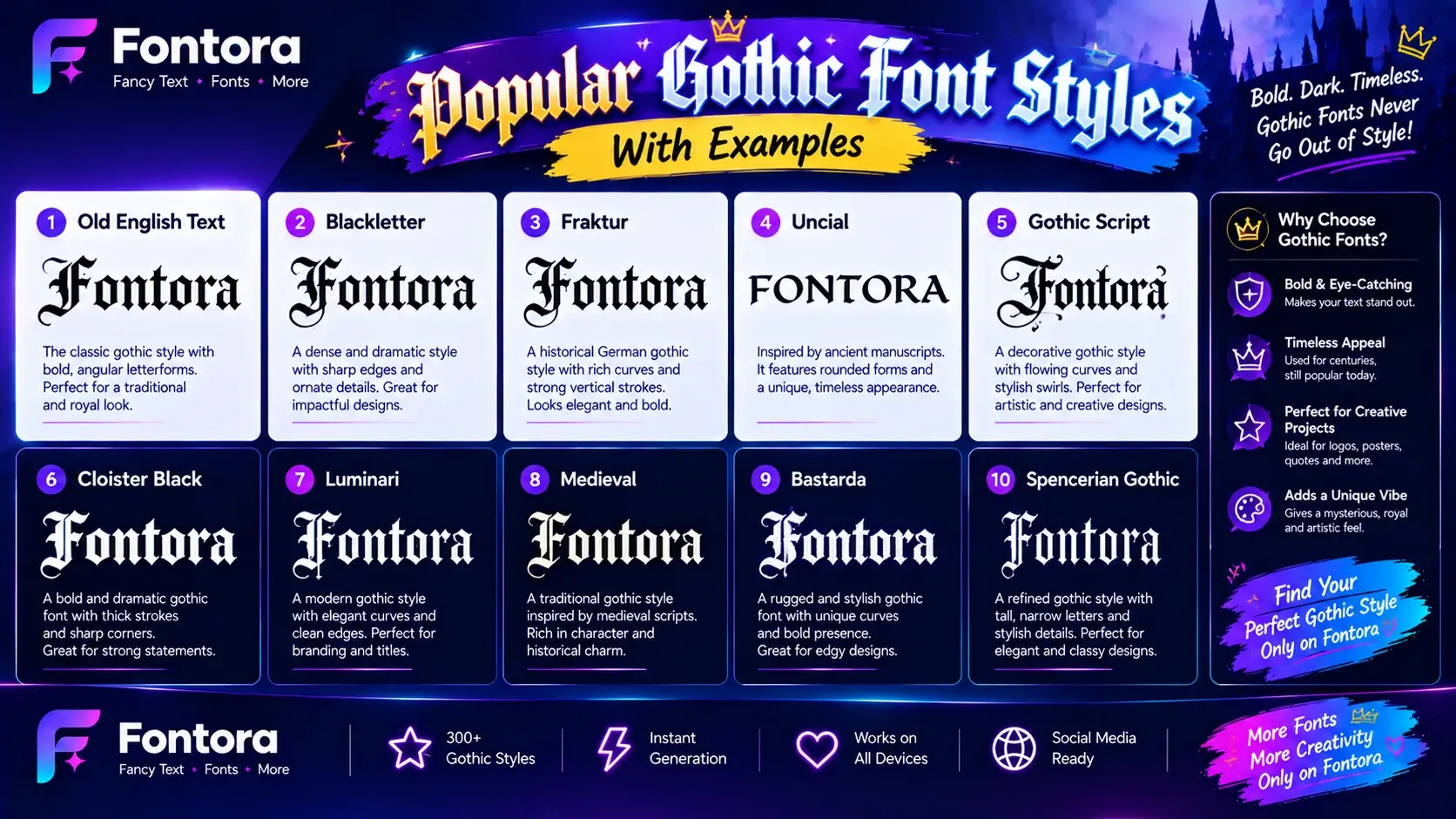
Popular Gothic Font Styles With Examples
Gothic fonts have different visual styles, and each style creates a unique impression. Some gothic fonts appear dark and powerful, while others look elegant, artistic, or modern.
Designers choose different gothic styles depending on the purpose of their project, such as branding, gaming, tattoos, posters, social media, or creative artwork.
Classic Gothic Font Style
Classic gothic fonts are inspired by traditional medieval blackletter writing. They maintain the original characteristics of gothic typography, including sharp edges, heavy strokes, and detailed letter structures.
They create a feeling of:
History
Tradition
Authority
Strength
Example:
Normal:
Dark Kingdom
Gothic style:
𝕯𝖆𝖗𝖐 𝕶𝖎𝖓𝖌𝖉𝖔𝖒
Common uses:
Historical designs
Certificates
Traditional logos
Medieval artwork
Classic gothic fonts are ideal when a design needs an authentic historical appearance.
Dark Gothic Font Style
Dark gothic fonts focus on creating a mysterious, dramatic, and intense visual effect.
They are commonly associated with:
Horror themes
Fantasy designs
Metal music
Alternative culture
Example:
Normal:
Shadow Night
Gothic style:
𝕾𝖍𝖆𝖉𝖔𝖜 𝕹𝖎𝖌𝖍𝖙
Common uses:
Horror posters
Gaming profiles
Album covers
Dark-themed artwork
These fonts help create a powerful emotional impact.
Elegant Gothic Font Style
Elegant gothic fonts combine traditional gothic structures with refined and decorative details.
Unlike extremely heavy gothic styles, elegant versions focus more on:
Smooth curves
Balanced spacing
Artistic appearance
Example:
Normal:
Luxury Design
Gothic style:
𝕷𝖚𝖝𝖚𝖗𝖞 𝕯𝖊𝖘𝖎𝖌𝖓
Common uses:
Fashion branding
Jewellery logos
Premium products
Creative invitations
Elegant gothic fonts are useful when a project needs both sophistication and boldness.
Gothic Tattoo Font Style
Gothic fonts are extremely popular in tattoo design because they create strong personal symbolism.
Tattoo gothic styles often include:
Bold lettering
Decorative strokes
Historical influences
Powerful visual identity
Common tattoo uses:
Names
Quotes
Personal messages
Symbols
Example:
𝕱𝖔𝖗𝖊𝖛𝖊𝖗
Gothic tattoo fonts are chosen because they create a timeless and meaningful appearance.
Gothic Gaming Font Style
Gaming communities often use gothic fonts to create unique usernames and team identities.
They are popular because they communicate:
Power
Mystery
Competitive personality
Strength
Examples:
🎮 𝕯𝖆𝖗𝖐 𝕲𝖆𝖒𝖊𝖗
⚔️ 𝕹𝖎𝖌𝖍𝖙 𝖂𝖆𝖗𝖗𝖎𝖔𝖗
Common uses:
Gaming usernames
Clan names
Streaming profiles
Esports branding
Gothic gaming fonts help players create memorable digital identities.
Modern Gothic Font Style
Modern gothic fonts adapt traditional gothic elements for today's digital environment.
They usually have:
Cleaner shapes
Better readability
Simplified details
Contemporary appearance
Example:
𝕸𝖔𝖉𝖊𝖗𝖓 𝕾𝖙𝖞𝖑𝖊
Common uses:
Websites
Digital branding
Social media
Creative businesses
Modern gothic fonts allow designers to use gothic aesthetics without making designs difficult to read.
Gothic Calligraphy Style
Gothic calligraphy combines gothic typography with artistic handwriting techniques.
It creates a more decorative and premium appearance.
Characteristics:
Detailed strokes
Artistic curves
Elegant letterforms
Handcrafted feeling
Example:
𝓖𝓸𝓽𝓱𝓲𝓬 𝓒𝓪𝓵𝓵𝓲𝓰𝓻𝓪𝓹𝓱𝔂
Common uses:
Wedding designs
Luxury branding
Certificates
Artwork
Gothic Logo Font Style
Many brands use gothic-inspired fonts to create strong and recognisable logos.
Gothic logo fonts communicate:
Heritage
Uniqueness
Confidence
Creativity
Popular industries:
Fashion
Streetwear
Music
Gaming
Alternative lifestyle brands
A gothic logo can help a brand appear different from competitors.
How To Choose The Right Gothic Font Style
Choose your gothic font based on your design goal. Choose your gothic font based on your design goal. Understanding font psychology can help designers select typography that matches the emotion, personality, and message they want to communicate.
For historical designs:
Use:
Classic gothic
Blackletter styles
For gaming:
Use:
Dark gothic
Modern gothic
For luxury branding:
Use:
Elegant gothic
Gothic calligraphy
For tattoos:
Use:
Bold gothic
Decorative gothic
For digital projects:
Use:
Modern gothic
Minimal gothic
Gothic Font Style Examples For Different Projects
Gaming Username
⚔️ 𝕯𝖆𝖗𝖐 𝕷𝖊𝖌𝖊𝖓𝖉
Brand Name
🖤 𝕷𝖚𝖝𝖚𝖗𝖞 𝕾𝖙𝖞𝖑𝖊
Tattoo Design
𝕱𝖔𝖗𝖊𝖛𝖊𝖗
Creative Poster
𝕿𝖍𝖊 𝕯𝖆𝖗𝖐 𝕿𝖎𝖒𝖊
Gothic font styles provide designers with many creative options, from historical blackletter designs to modern digital typography. By selecting the right gothic style, creators can communicate personality, emotion, and visual identity more effectively.
Where Are Gothic Fonts Used?
Gothic fonts are widely used in modern design because they create a strong visual identity and communicate powerful emotions. Although gothic typography originated from medieval European writing, designers today use it across different industries, including gaming, fashion, branding, tattoos, entertainment, and social media.
The dramatic appearance of gothic lettering makes it suitable for projects that need a bold, artistic, or memorable style.
Gothic Fonts In Gaming
Gaming is one of the most popular areas where gothic fonts are used. Players often choose gothic typography to create unique usernames, clan names, and gaming identities.
Gothic fonts work well in gaming because they communicate:
Strength
Mystery
Power
Competitive personality
Common uses include:
Gamer usernames
Esports team names
Streaming profiles
Gaming logos
Character names
Examples:
🎮 𝕯𝖆𝖗𝖐 𝖂𝖆𝖗𝖗𝖎𝖔𝖗
⚔️ 𝕹𝖎𝖌𝖍𝖙 𝕷𝖊𝖌𝖊𝖓𝖉
A gothic gaming name helps players create a memorable identity within online communities.
Gothic Fonts In Logos And Branding
Typography plays an important role in brand recognition. Many businesses use gothic fonts in logos because they create a distinctive and powerful appearance.
Gothic branding can communicate:
Heritage
Creativity
Confidence
Premium quality
Individuality
Industries that commonly use gothic typography include:
Fashion brands
Streetwear companies
Tattoo studios
Music brands
Alternative lifestyle businesses
For example, a streetwear brand may use a bold gothic logo to create a rebellious and unique identity.
Gothic Fonts In Tattoo Designs
Gothic lettering has been popular in tattoo culture for many years. The strong shapes and artistic details make gothic fonts suitable for meaningful personal designs.
Common tattoo uses:
Names
Quotes
Important dates
Symbols
Personal messages
Popular gothic tattoo styles include:
Blackletter
Old English
Gothic calligraphy
Example:
𝕱𝖆𝖒𝖎𝖑𝖞
𝕱𝖔𝖗𝖊𝖛𝖊𝖗
Gothic tattoo fonts create a timeless appearance that combines personal meaning with artistic design.
Gothic Fonts In Music And Entertainment
The entertainment industry frequently uses gothic typography to create a specific mood and visual identity.
Common uses include:
Album covers
Band logos
Concert posters
Movie artwork
Horror-themed designs
Gothic fonts are especially popular in:
Metal music
Rock culture
Fantasy themes
Dark entertainment genres
Their dramatic appearance helps audiences immediately recognise the tone and style of the content.
Gothic Fonts In Fashion And Streetwear
Fashion brands often use gothic typography to create bold and unconventional identities.
Gothic fonts are especially popular in:
Streetwear brands
Alternative fashion
Luxury fashion designs
Clothing prints
They help communicate:
Individuality
Rebellion
Creativity
Strong personality
Many modern clothing designs combine gothic lettering with minimalist layouts to create a premium and fashionable appearance.
Gothic Fonts In Social Media
Social media users use gothic fonts to make their profiles and content stand out.
Popular platforms include:
Instagram
TikTok
Discord
Facebook
Pinterest
Users create gothic text for:
Usernames
Bios
Captions
Profile names
Quote posts
Example:
Normal:
Dark Soul
Gothic:
𝕯𝖆𝖗𝖐 𝕾𝖔𝖚𝖑
Gothic text helps users create a unique online personality.
Gothic Fonts In Book Covers And Posters
Designers often choose gothic typography for projects that require a historical, mysterious, or fantasy-inspired appearance.
Common uses:
Fantasy novels
Horror books
Historical publications
Movie posters
Event posters
Gothic fonts help viewers understand the theme before reading the content.
For example:
A fantasy book may use gothic lettering to suggest medieval worlds, magic, or adventure.
Gothic Fonts In Website Design
Gothic fonts can be effective in website design when used strategically.
They work well for:
Brand logos
Hero headings
Creative portfolios
Special announcements
However, designers should avoid using gothic fonts for large paragraphs because complex letter structures can reduce readability.
A good website design often combines:
Gothic font:
For visual impact
Sans serif font:
For readable content
This creates a balance between creativity and user experience.
Gothic Fonts In Digital Artwork
Artists and designers use gothic typography to enhance creative projects.
Common applications:
Digital illustrations
Wallpapers
Posters
Merchandise designs
Character artwork
The dramatic appearance of gothic letters helps add personality and emotion to visual compositions.
Why Gothic Fonts Work So Well In Creative Industries
Gothic typography is effective because it creates an immediate emotional response.
It can make a design feel:
Powerful
Mysterious
Historical
Artistic
Unique
Unlike simple modern fonts, gothic styles have a strong personality that helps designs stand apart.
Choosing Gothic Fonts For Different Purposes
Choose gothic fonts based on your project:
Gaming
Best styles:
Dark gothic
Modern gothic
Blackletter
Branding
Best styles:
Elegant gothic
Minimal gothic
Tattoos
Best styles:
Old English
Traditional blackletter
Music And Entertainment
Best styles:
Dramatic gothic
Decorative gothic
Social Media
Best styles:
Modern gothic
Gothic text styles
Gothic fonts continue to remain popular because they combine history, creativity, and strong visual expression. From gaming usernames and fashion logos to tattoos and digital artwork, gothic typography gives designs a distinctive personality that captures attention.
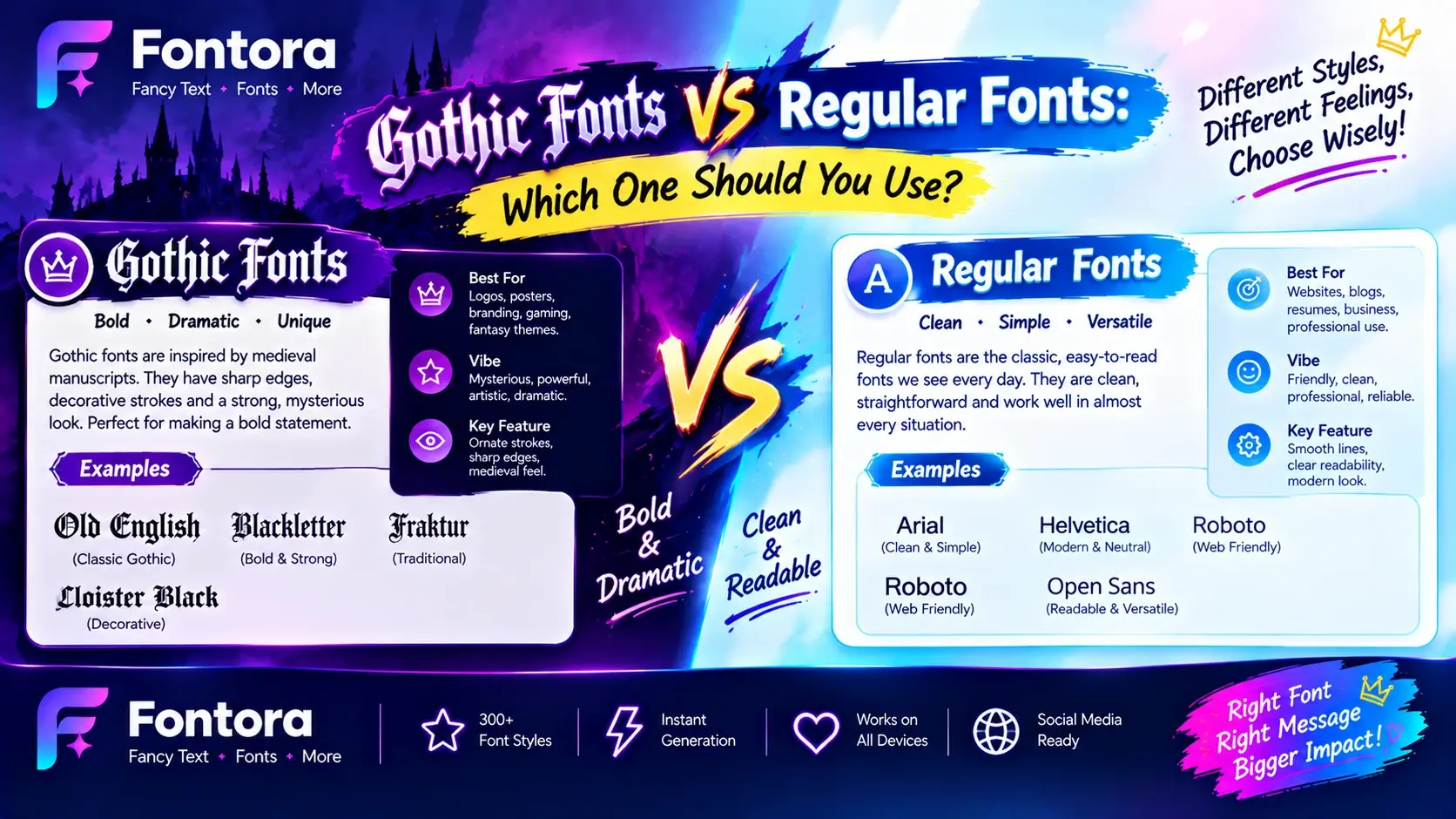
Gothic Fonts vs Regular Fonts: Which One Should You Use?
Gothic fonts and regular fonts serve different purposes in typography. Gothic fonts focus on creating a strong visual identity, emotional impact, and artistic expression, while regular fonts are designed for clarity, simplicity, and easy communication.
The right choice depends on your project goals, audience, platform, and the message you want your design to deliver.
What Are Gothic Fonts?
Gothic fonts are typography styles inspired by medieval blackletter writing. They usually contain sharp edges, heavy strokes, decorative details, and dramatic letter structures.
They are commonly used for:
Logos
Gaming usernames
Tattoos
Music artwork
Fashion branding
Creative designs
Gothic fonts communicate feelings such as:
Power
Mystery
Tradition
Individuality
Example:
Normal:
Dark Warrior
Gothic:
𝕯𝖆𝖗𝖐 𝖂𝖆𝖗𝖗𝖎𝖔𝖗
What Are Regular Fonts?
Regular fonts are standard typography styles created for clear and comfortable reading. They usually have simple letter structures and balanced spacing.
Examples include:
Arial
Helvetica
Roboto
Open Sans
Times New Roman
Regular fonts are widely used in:
Websites
Articles
Applications
Business documents
Educational content
Their main purpose is:
Easy reading
Clear communication
Professional presentation
Main Differences Between Gothic Fonts And Regular Fonts
Visual Appearance
Gothic fonts:
Decorative letter shapes
Sharp edges
Bold appearance
Historical influence
Regular fonts:
Simple letter structures
Clean appearance
Balanced spacing
Modern readability
Purpose
Gothic fonts are mainly used when a design needs personality and visual impact.
Common purposes:
Branding
Gaming identities
Creative artwork
Posters
Entertainment designs
Regular fonts are mainly used for information sharing.
Common purposes:
Blog content
Website paragraphs
Reports
User interfaces
Readability
Regular fonts usually provide better readability, especially for long-form content.
They are suitable for:
Articles
Product descriptions
Instructions
Educational materials
Gothic fonts are better for shorter text because complex designs can make reading slower.
Best uses:
Headlines
Logos
Short phrases
Decorative elements
Emotional Impact
Gothic fonts create stronger emotional reactions because of their dramatic appearance.
They can communicate:
Mystery
Strength
Darkness
Historical feeling
Creativity
Regular fonts create feelings of:
Trust
Simplicity
Professionalism
Reliability
When Should You Use Gothic Fonts?
Gothic fonts are ideal when you want your design to stand out and create a strong identity.
Use gothic fonts for:
Logos
Gothic typography can help create a unique and memorable brand identity.
Examples:
Streetwear brands
Tattoo studios
Gaming companies
Music labels
Gaming Names And Profiles
Gothic fonts are popular among gamers because they create powerful usernames.
Examples:
⚔️ 𝕹𝖎𝖌𝖍𝖙 𝕶𝖎𝖓𝖌
🎮 𝕯𝖆𝖗𝖐 𝕷𝖊𝖌𝖊𝖓𝖉
Tattoos
Gothic fonts work well for meaningful tattoo designs because they create a timeless and artistic appearance.
Fashion And Entertainment
Brands use gothic typography to communicate:
Bold identity
Alternative style
Creativity
When Should You Use Regular Fonts?
Regular fonts are better when your main goal is communication and readability.
Use regular fonts for:
Website Content
Visitors need clear and comfortable reading experiences.
Blog Articles
Long-form content requires fonts that reduce eye strain.
Applications
Interfaces need simple and accessible typography.
Business Documents
Professional communication requires clarity.
Can Gothic Fonts And Regular Fonts Be Combined?
Yes, combining gothic and regular fonts is a common professional design approach.
A balanced combination could be:
Gothic font:
For:
Logo
Main heading
Brand name
Regular font:
For:
Paragraphs
Descriptions
Supporting text
Example:
Heading:
𝕲𝖔𝖙𝖍𝖎𝖈 𝕾𝖙𝖞𝖑𝖊
Body:
Explore creative typography and modern design ideas.
This approach creates visual impact while maintaining readability.
Gothic Fonts vs Regular Fonts For Websites
For website design, the best strategy is usually a combination of both styles.
Use gothic fonts for:
Logo design
Hero sections
Creative headings
Brand statements
Use regular fonts for:
Blog posts
Navigation menus
Product descriptions
Website information
A website should always prioritise user experience. Typography should improve the design without making information difficult to access.
Which Font Style Is Better?
Neither gothic fonts nor regular fonts are always better. Each style has a different purpose.
Choose gothic fonts when you need:
Strong personality
Artistic expression
A unique appearance
Emotional impact
Choose regular fonts when you need:
Clear communication
Easy reading
Professional structure
Universal usability
The strongest designs use typography strategically by combining creative styles with readable fonts.
Understanding the difference between gothic fonts and regular fonts helps designers make better typography decisions. Gothic styles bring personality, history, and creativity, while regular fonts provide clarity and usability. Choosing the right style allows brands and creators to build designs that are both attractive and effective.
How To Create Gothic Text With Fontora
Creating gothic text is an easy way to transform ordinary words into bold, artistic, and dramatic typography. Creating gothic text is an easy way to transform ordinary words into bold, artistic, and dramatic typography. A gothic text generator allows users to create unique lettering styles without needing professional design software or advanced typography skills.
With Fontora, users can explore different gothic styles and create text for gaming profiles, social media usernames, logos, creative artwork, and personal projects.
Step 1: Enter Your Text
The first step is choosing the text you want to convert into a gothic style.
You can create gothic versions of:
Usernames
Brand names
Gaming names
Quotes
Social media bios
Creative messages
Examples:
Normal text:
Dark Warrior
Brand name:
Shadow Studio
Gaming name:
Night Legend
Short and meaningful text usually creates the strongest gothic designs.
Step 2: Select A Gothic Font Style
After entering your text, choose a gothic style that matches your purpose.
Different gothic styles create different impressions.
Classic Gothic Style
Best for:
Historical designs
Traditional logos
Medieval themes
Example:
𝕮𝖑𝖆𝖘𝖘𝖎𝖈 𝕲𝖔𝖙𝖍𝖎𝖈
Dark Gothic Style
Best for:
Gaming profiles
Horror themes
Music designs
Example:
𝕯𝖆𝖗𝖐 𝕾𝖙𝖞𝖑𝖊
Modern Gothic Style
Best for:
Digital branding
Social media
Creative projects
Example:
𝕸𝖔𝖉𝖊𝖗𝖓 𝕲𝖔𝖙𝖍𝖎𝖈
Gothic Calligraphy Style
Best for:
Luxury designs
Invitations
Artistic projects
Example:
𝓖𝓸𝓽𝓱𝓎𝓬 𝓒𝓪𝓵𝓵𝓲𝓰𝓻𝓪𝓹𝓱𝔂
Step 3: Generate Gothic Text
A gothic text generator converts normal characters into gothic-style designs using special typography characters.
The process works like this:
Enter your text
The generator creates different gothic variations
Select your favourite style
Copy the generated text
Example:
Input:
Dark Knight
Generated:
𝕯𝖆𝖗𝖐 𝕶𝖓𝖎𝖌𝖍𝖙
The original meaning remains the same, but the visual appearance becomes more powerful and artistic.
Step 4: Copy And Use Your Gothic Text
After generating your gothic text, you can use it on different platforms.
Common uses include:
Gaming Profiles
Gothic text is popular for:
Player names
Clan names
Streaming profiles
Character names
Example:
⚔️ 𝕹𝖎𝖌𝖍𝖙 𝖂𝖆𝖗𝖗𝖎𝖔𝖗
Social Media
Use gothic text for:
Instagram bios
TikTok usernames
Facebook posts
Discord profiles
Example:
🖤 𝕯𝖆𝖗𝖐 𝕾𝖔𝖚𝖑
Branding Ideas
Businesses can use gothic text inspiration for:
Logo concepts
Clothing designs
Product names
Creative campaigns
Step 5: Check Readability
A gothic design should look powerful while remaining understandable.
Before using your text, check:
Are the letters easy to recognise?
Does it match your audience?
Does it display correctly on different devices?
Is the design too complicated?
Very decorative gothic styles may look attractive but can become difficult to read.
Why Use Fontora For Gothic Text?
Fontora helps users quickly explore gothic typography styles without manually searching for special characters.
Users can create:
Gothic usernames
Stylish gaming names
Creative social media text
Brand inspiration
Decorative designs
The tool makes it easier to experiment with different gothic appearances and find a style that matches your personality or project.
Best Practices For Creating Gothic Text
Choose Short Text
Gothic styles work best with:
Names
Titles
Short phrases
Brand names
Long sentences can become difficult to read.
Match The Style With Your Purpose
Choose:
Classic gothic for historical themes.
Dark gothic for gaming and entertainment.
Modern gothic for digital branding.
Gothic calligraphy for elegant designs.
Use Symbols Carefully
Symbols can improve gothic designs when used properly.
Examples:
⚔️ 𝕯𝖆𝖗𝖐 𝕶𝖓𝖎𝖌𝖍𝖙
🖤 𝕭𝖑𝖆𝖈𝖐 𝕾𝖔𝖚𝖑
Avoid adding too many symbols because they can reduce readability.
Where Can You Use Gothic Text?
Gothic text created with Fontora can be used for:
Gaming usernames
Social media profiles
Creative artwork
Logo inspiration
Digital designs
Online communities
Its flexibility makes gothic typography useful for both personal expression and creative branding.
Creating gothic text allows users to add a bold and memorable style to ordinary words. With Fontora, anyone can explore gothic typography, generate unique designs, and create text that reflects personality, creativity, and visual identity.
Conclusion: Use Gothic Fonts To Create Powerful And Memorable Designs
Gothic fonts are one of the most recognisable typography styles because they combine historical influence, artistic details, and strong visual expression. From medieval blackletter manuscripts to modern digital designs, gothic typography has continued to evolve while maintaining its unique identity.
Today, gothic fonts are used in many creative fields, including gaming, branding, tattoos, fashion, music, social media, and digital artwork. Their bold strokes, sharp edges, and dramatic appearance help creators communicate strength, mystery, creativity, and individuality.
Choosing the right gothic font style depends on the purpose of your design. Traditional blackletter styles work well for historical and classic projects, while modern gothic fonts are better suited for digital branding, gaming profiles, and contemporary designs.
Although gothic fonts create a powerful visual impact, they should be used strategically. Combining gothic typography with readable fonts creates a balanced design that looks attractive while remaining easy to understand.
Whether you are creating a unique gaming username, designing a logo, building a brand identity, or exploring creative typography, gothic fonts provide an excellent way to make your text stand out and leave a lasting impression.
Frequently Asked Questions About Gothic Fonts
What are gothic fonts?
Gothic fonts are typography styles inspired by medieval European writing and blackletter scripts. They feature bold strokes, sharp edges, and decorative letter designs that create a dramatic and artistic appearance. Gothic fonts are commonly used in logos, gaming names, tattoos, fashion designs, music artwork, and creative projects.
Are gothic fonts the same as blackletter fonts?
Gothic fonts and blackletter fonts are closely related but not exactly the same. Blackletter is a historical style of gothic typography that originated in medieval Europe, while gothic fonts include a wider range of traditional and modern designs inspired by blackletter lettering.
Where are gothic fonts commonly used?
Gothic fonts are commonly used in:
Gaming usernames
Brand logos
Tattoo designs
Fashion graphics
Music artwork
Social media profiles
Posters and creative designs
They are popular because they create a bold, unique, and memorable visual identity.
Are gothic fonts good for logos?
Yes, gothic fonts can work well for logos when a brand wants to communicate strength, tradition, creativity, or uniqueness. They are commonly used by fashion brands, tattoo studios, gaming companies, and alternative lifestyle businesses.
Are gothic fonts easy to read?
Gothic fonts can be readable when used correctly, especially for short text such as logos, headings, and usernames. However, highly decorative gothic styles may become difficult to read in long paragraphs or small text.
How can I create gothic text online?
You can create gothic text online by using a gothic font generator. Enter your desired text, choose a gothic style, generate the design, and copy the result for use in gaming profiles, social media bios, creative projects, or branding ideas.
Why are gothic fonts popular in gaming?
Gothic fonts are popular in gaming because they create a powerful and mysterious appearance. Players use gothic typography for usernames, clan names, and profiles to express strength, personality, and a unique gaming identity.
Can I use gothic fonts on social media?
Yes, gothic-style text can be used on platforms such as Instagram, TikTok, Discord, and Facebook. Many users create gothic usernames, bios, and captions using Unicode-based gothic characters that can be copied and pasted easily.
What is the difference between gothic fonts and modern fonts?
Gothic fonts focus on artistic details, dramatic shapes, and historical inspiration, while modern fonts usually focus on simplicity, readability, and clean design. Gothic styles are often used for creative expression, while modern fonts are preferred for everyday communication.
Which gothic font style is best for tattoos?
Blackletter, Old English, and gothic calligraphy styles are commonly used for tattoos because they provide strong visual impact and timeless appearance. The best choice depends on the meaning, size, and placement of the tattoo design.