Skip to content
Fontora

Fontora Blog

Explore guides, tutorials, and insights about Unicode fonts, fancy text, typography, social media fonts, copy-and-paste text styles, and more.

Latest articles

25 articles

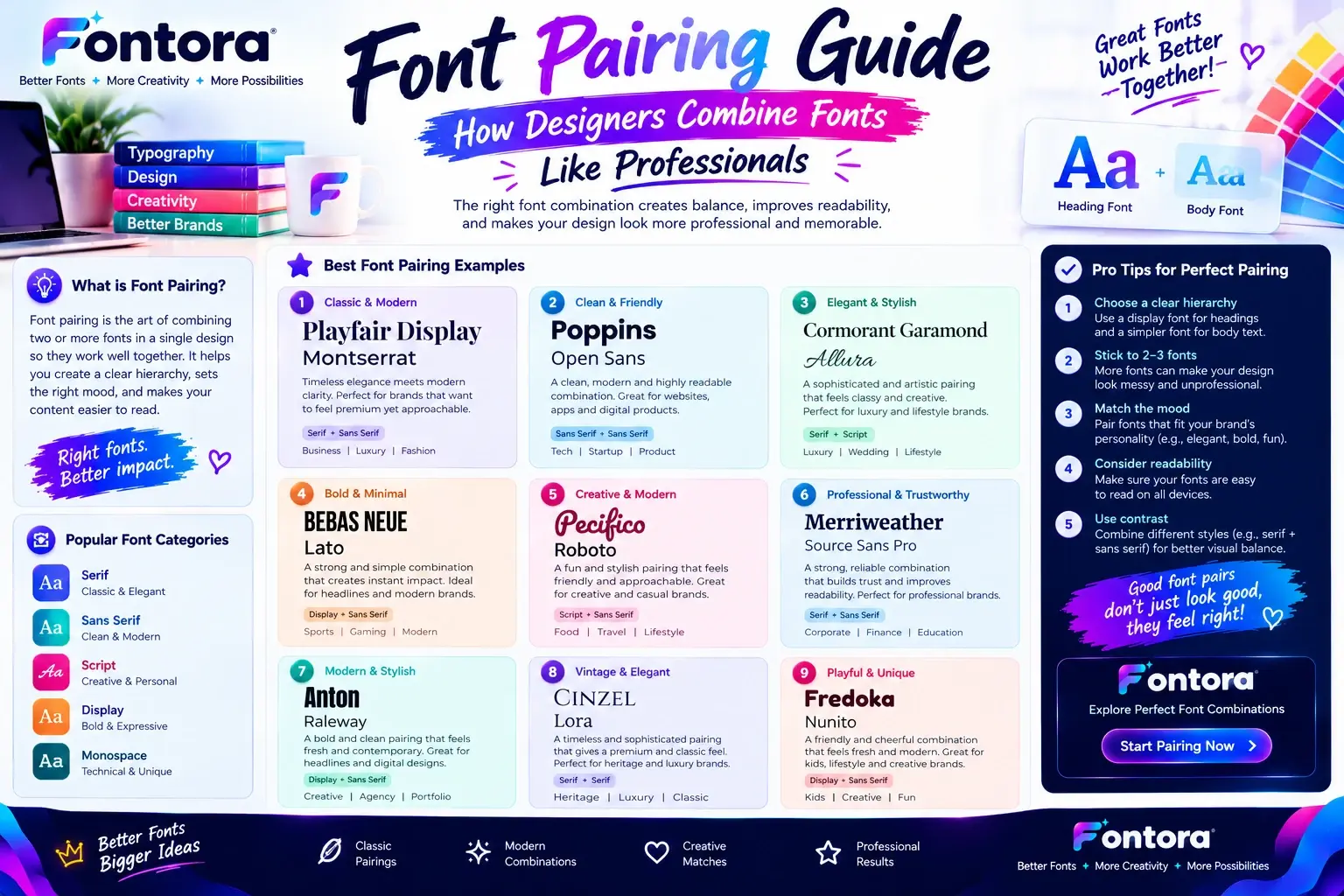
Fontora infographic showing font pairing examples such as Playfair Display with Montserrat, Poppins with Open Sans, and Cormorant Garamond with Allura, plus typography categories and tips for choosing complementary fonts.

Font Pairing Guide: How Designers Combine Fonts Like Pro

Introduction Choosing the right fonts can completely change how people understand and interact with a design. Font pairing is the process of combining different typefaces that complement each other to create harmony, readability, and visual impact. Professional designers do not simply choose fonts…
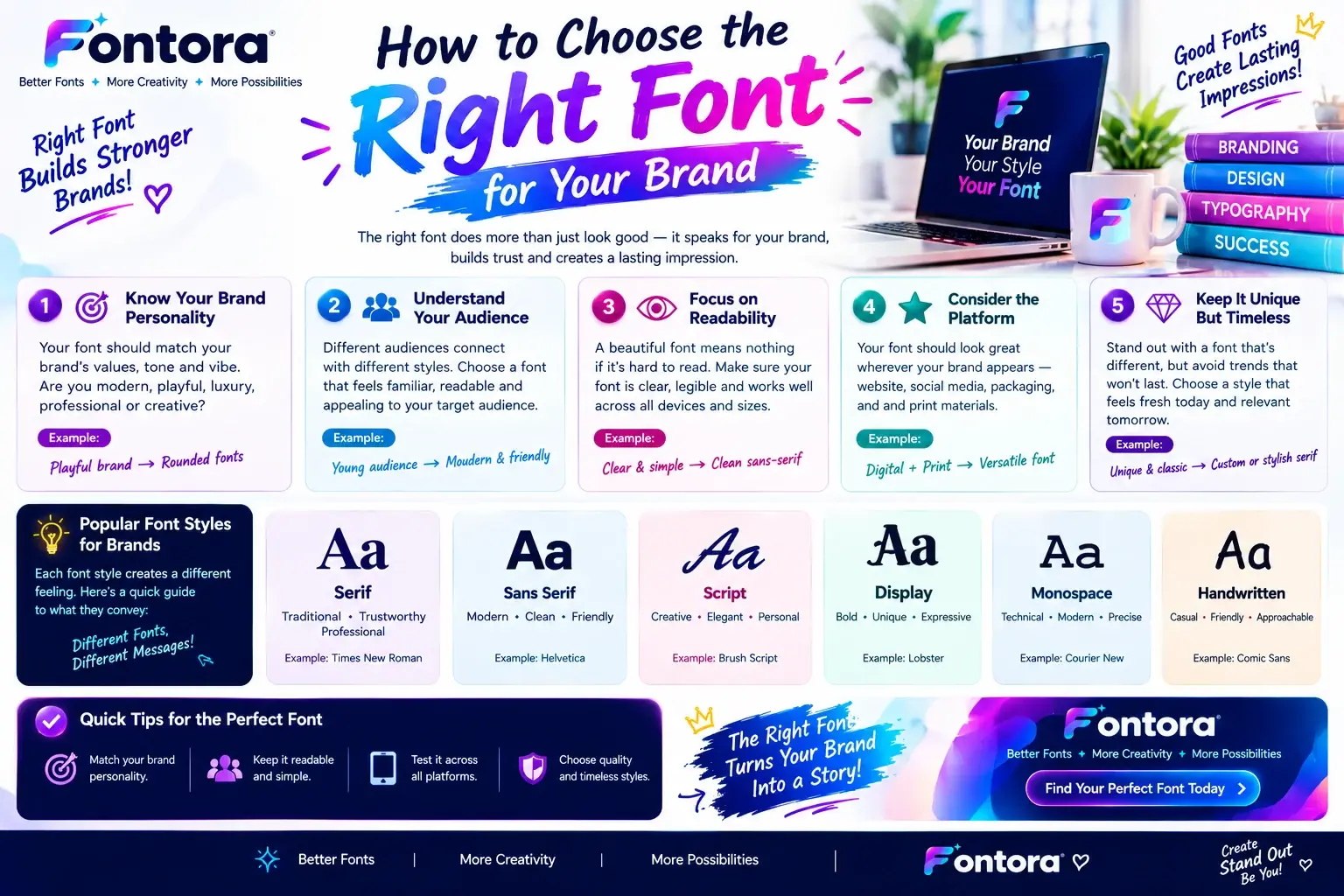
Fontora infographic explaining how to choose the right font for a brand, with tips on brand personality, audience, readability, platform compatibility, and popular font styles.

How to Choose the Right Font for Your Brand

Quick Answer: How Do You Choose The Right Font For Your Brand? Choosing the right font for your brand starts with understanding your brand personality, target audience, and the message you want to communicate. A good brand font should reflect your business identity, remain easy to read across different platforms, and create consistency between your logo, website, social media, and marketing materials. The right typography helps build recognition and a stronger connection with your audience.

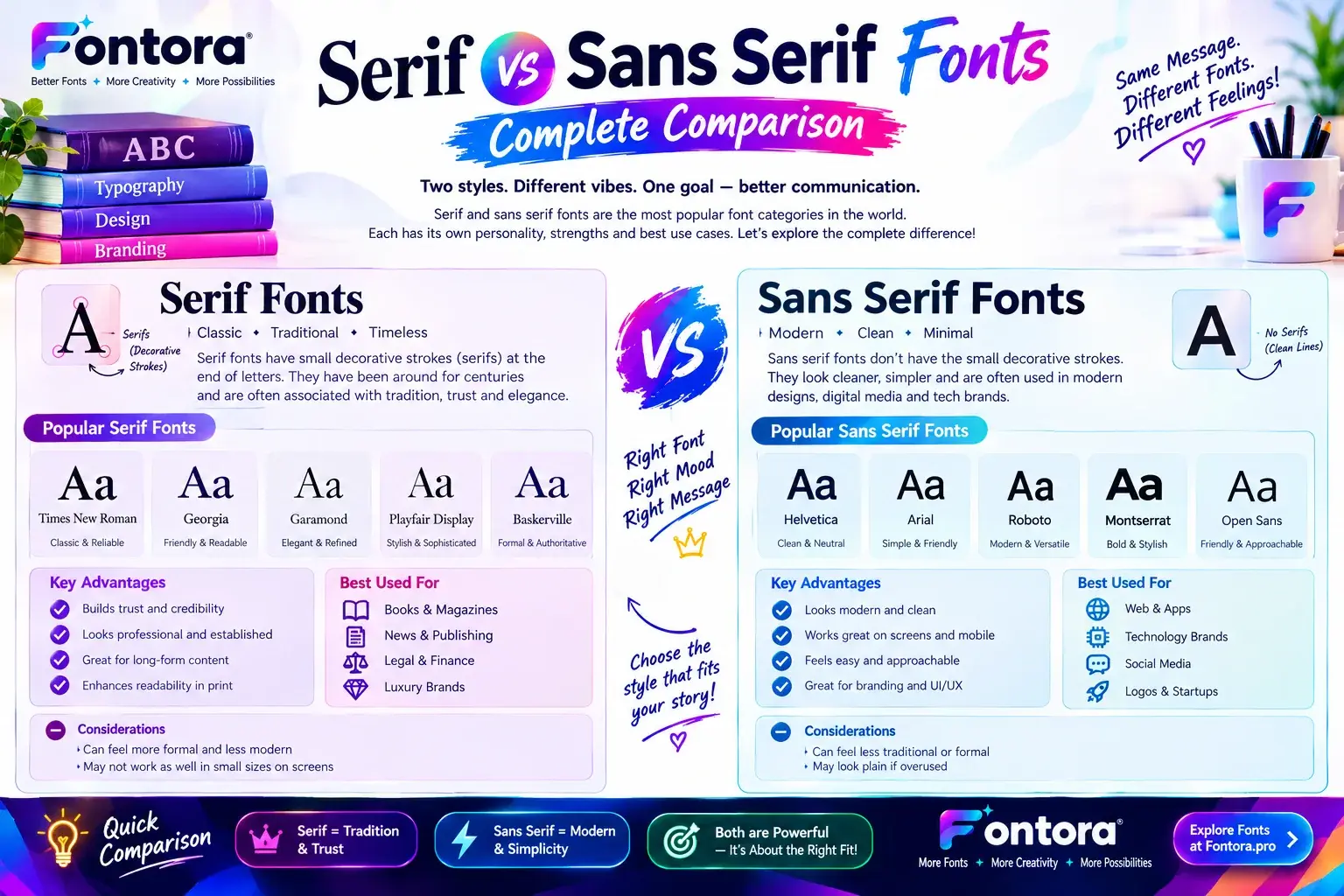
Infographic comparing serif and sans serif fonts, including their defining features, popular typefaces, advantages, drawbacks, and best uses in print, websites, apps, branding, and digital design.

Serif vs Sans Serif Fonts: Complete Comparison

What is the difference between serif and sans serif fonts? Serif and sans serif fonts are two major typography styles. Serif fonts have small decorative strokes at the ends of letters, while sans serif fonts have clean, simple edges without these strokes. Serif styles often create a traditional and elegant feel, whereas sans serif fonts provide a modern and minimal appearance.

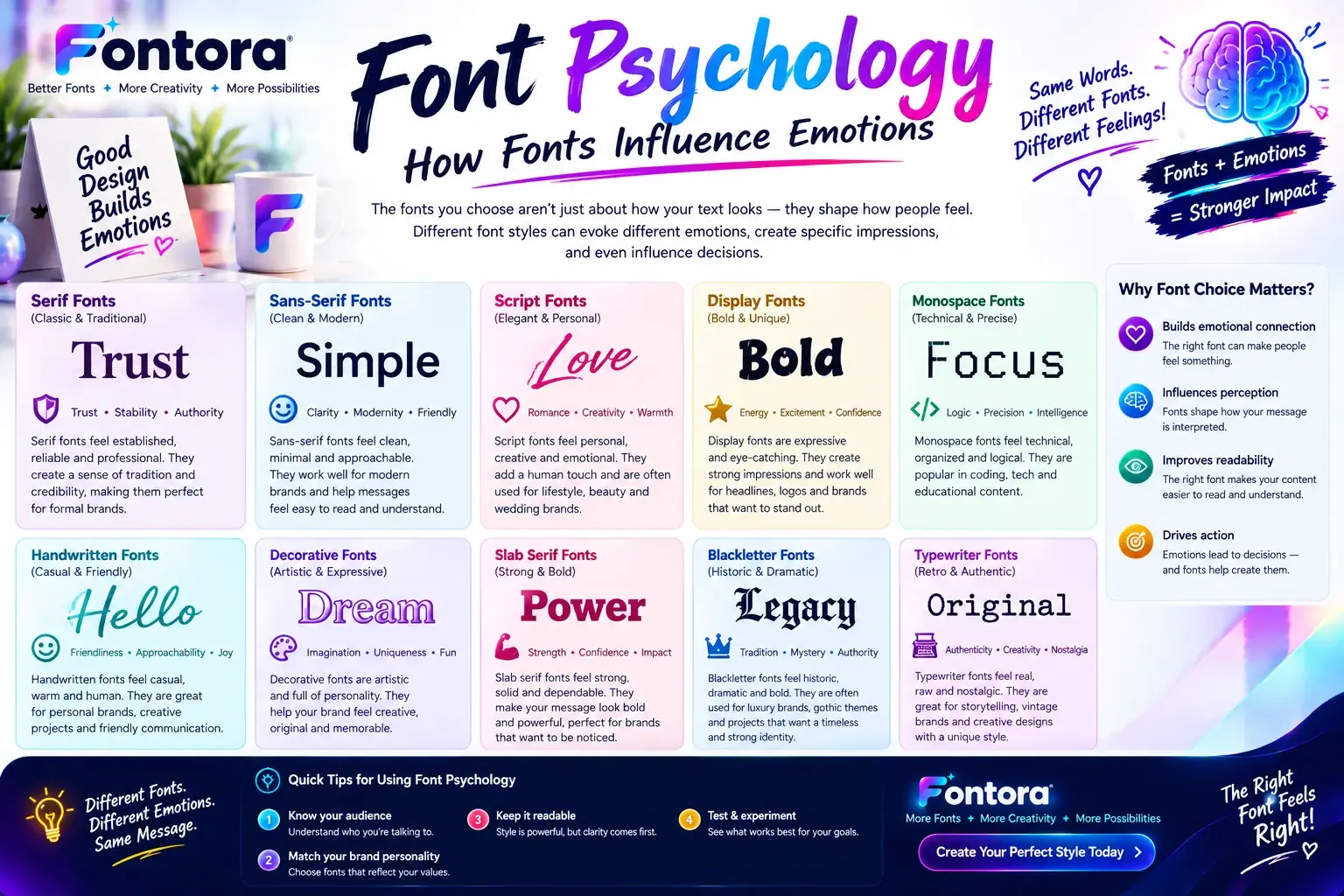
Fontora infographic explaining font psychology and how serif, sans-serif, script, display, monospace, handwritten, decorative, slab serif, blackletter, and typewriter fonts influence emotions and brand perception.

Font Psychology: How Fonts Influence Emotions | Fontora

Font psychology is the study of how different fonts and typefaces influence human emotions, perceptions, and behaviors. It explains why certain fonts feel professional, trustworthy, playful, or luxurious and how designers use typography choices to communicate a specific message or brand personality.

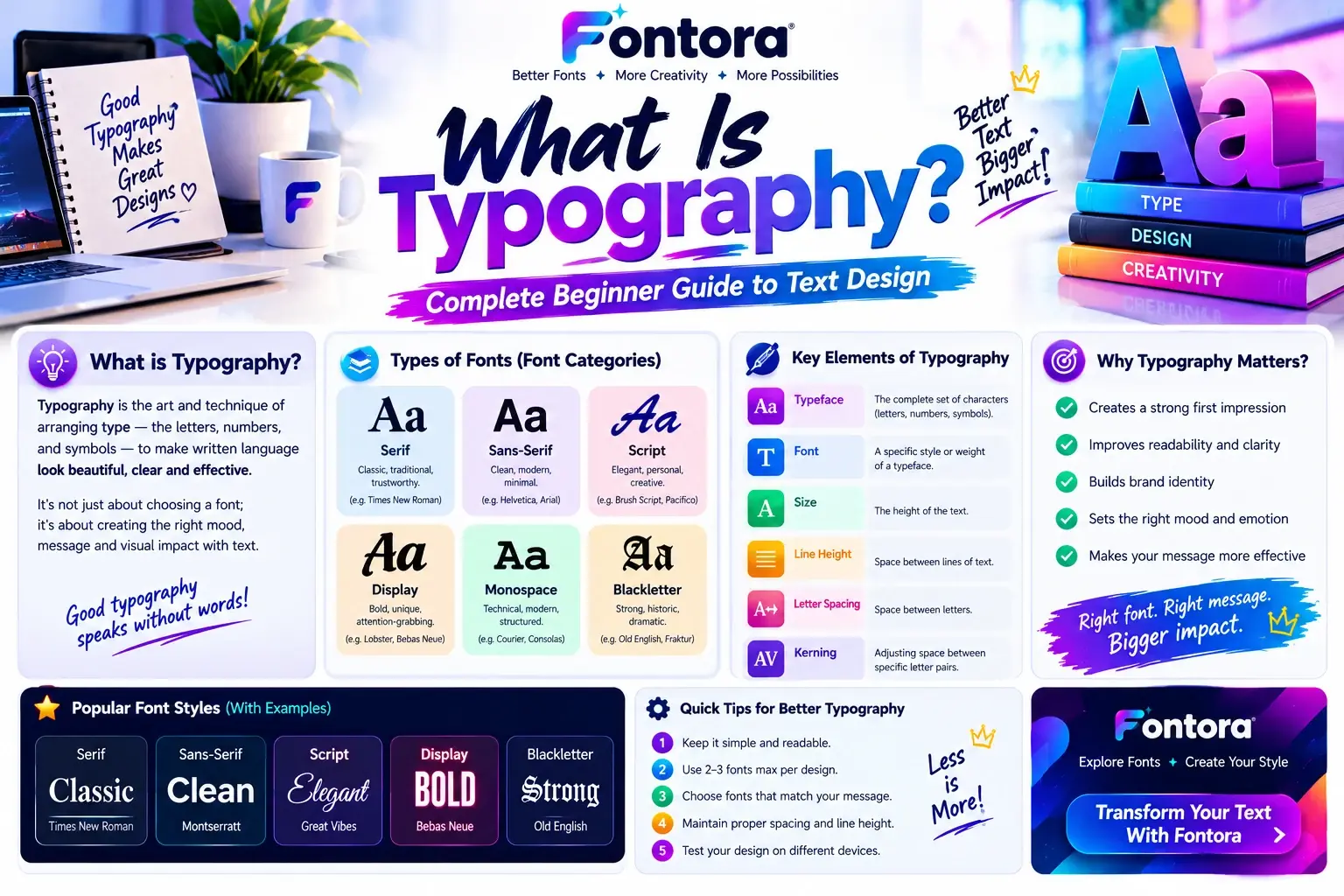
Fontora infographic explaining typography, font categories, key typography elements, benefits, popular font styles, and tips for better text design.

What Is Typography? Complete Beginner Guide to Text Design

What Is Typography? Typography is the art and technique of arranging text to make written content clear, readable, and visually appealing. It includes selecting fonts, adjusting spacing, creating hierarchy, and organizing text layouts. Designers use typography in websites, branding, apps, books, and digital content to improve communication and user experience.

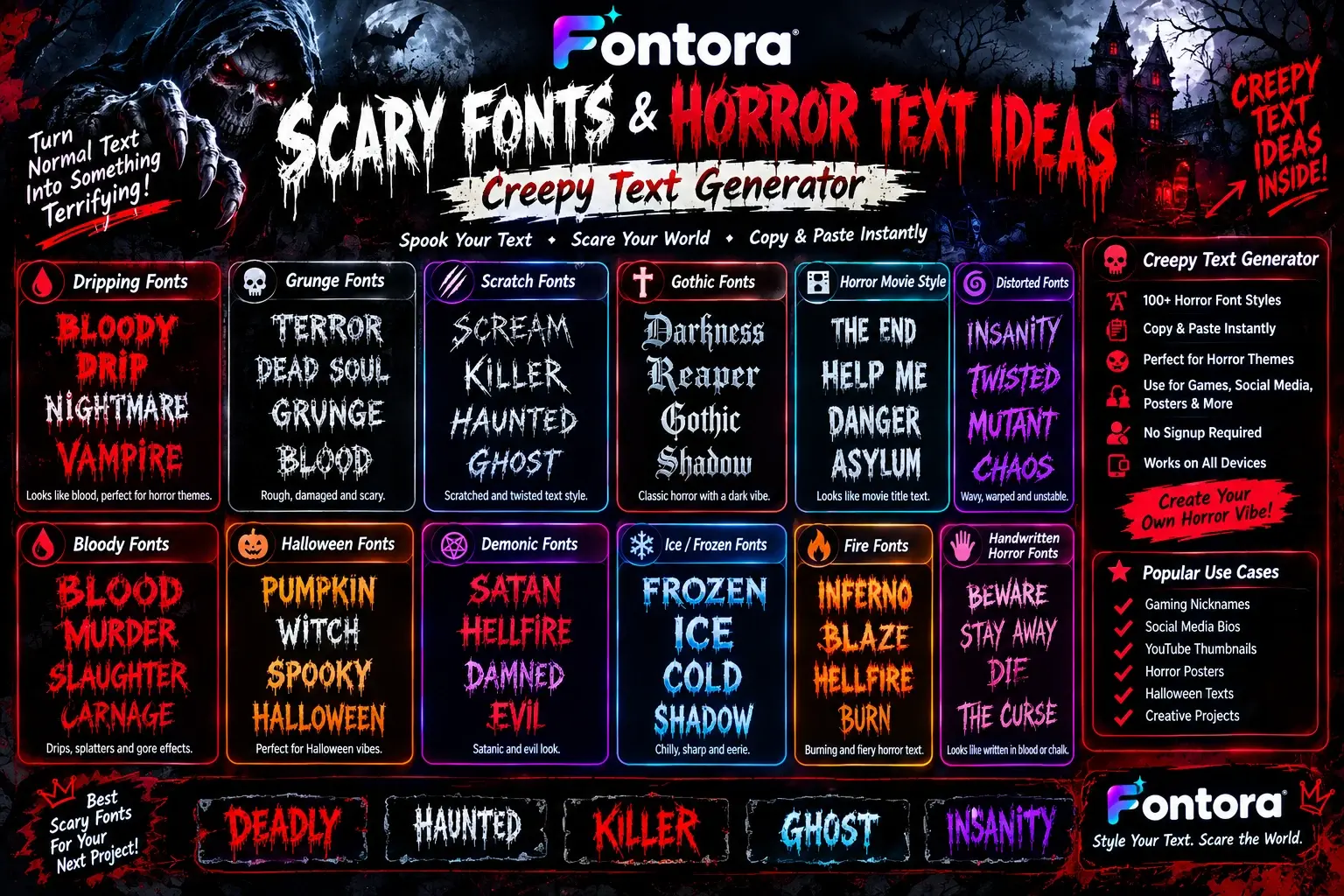
Fontora infographic showcasing scary fonts and horror text ideas, including dripping, grunge, scratch, gothic, Halloween, demonic, ice, fire, and handwritten horror styles.

Scary Fonts & Horror Text Ideas: Creepy Text Generator

Scary fonts are horror-inspired text styles that make words look dark, creepy, gothic, distorted, or supernatural. Online generators often create these effects with Unicode characters and symbols, allowing users to copy and paste horror text into gaming names, social profiles, Halloween content, messages, and other supported digital platforms.

Ready to create something?

Open the Fancy Font Generator
Blog