 By Hamza
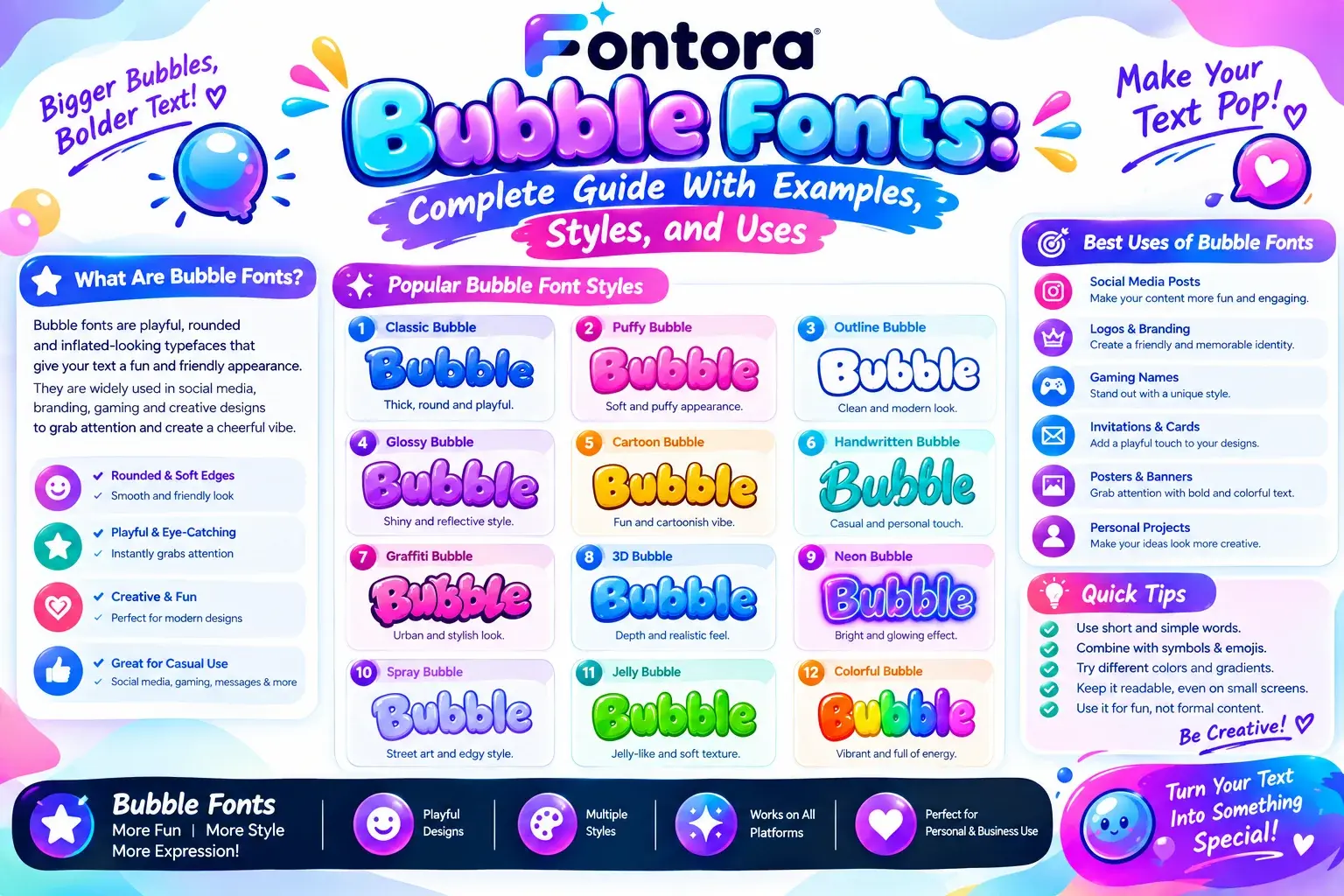
Bubble fonts are a typography style that uses rounded, thick, and soft letter shapes to create a fun and playful appearance. They are inspired by hand-drawn lettering, cartoon designs, and graffiti art. Bubble fonts are commonly used in children's designs, logos, social media content, posters, gaming profiles, and creative digital projects.
Bubble Fonts: Complete Guide With Examples, Styles, and Uses
Introduction
Bubble fonts are a playful typography style known for their rounded shapes, soft edges, and creative appearance. Designers, artists, brands, and content creators use bubble typography to create friendly, fun, and eye-catching designs across social media, logos, posters, packaging, and digital projects.
Inspired by hand-drawn lettering, cartoon designs, and graffiti art, bubble fonts bring a sense of creativity and personality to visual communication. Their bold and approachable style makes them popular for children's brands, gaming communities, creative businesses, and modern digital content.
In this complete guide, you will learn what bubble fonts are, how they work, different bubble font styles, where they are used, and how to create stylish bubble text for your own projects.
What Are Bubble Fonts?
Bubble fonts are a type of decorative typography where letters are designed with rounded edges, smooth curves, and bold shapes that resemble inflated bubbles. Unlike traditional fonts with sharp or structured forms, bubble typography focuses on softness, creativity, and visual friendliness.
The main purpose of bubble fonts is to make text appear:
Fun
Friendly
Creative
Approachable
Eye-catching
Because of their playful appearance, bubble fonts are often chosen for designs that need a youthful or energetic feeling.
Understanding Bubble Typography
Bubble typography is a design style where letters are created with large rounded forms and smooth shapes. The style is based on the idea of making letters look soft, three-dimensional, and visually attractive.
Bubble lettering is often associated with:
Cartoon artwork
Children's illustrations
Street art
School projects
Creative branding
Modern designers use typography to create designs that feel more expressive and memorable.
How Bubble Fonts Are Different From Regular Fonts
Regular fonts usually focus on:
Clear communication
Professional appearance
Easy reading
Bubble fonts focus on:
Creativity
Visual impact
Emotional connection
Unique appearance
Example:
Regular text:
Happy World
Bubble style:
Ⓗⓐⓟⓟⓨ Ⓦⓞⓡⓛⓓ
The bubble version creates a more playful and friendly impression.
Main Characteristics Of Bubble Fonts
Bubble fonts have several unique features that make them recognisable.
Rounded Letter Shapes
The most important feature of bubble fonts is their rounded structure.
Letters usually have:
Smooth curves
Soft corners
Circular shapes
These elements make the text appear friendly and approachable.
Thick And Bold Appearance
Bubble fonts generally use thick letter strokes to create a strong visual presence.
This helps them stand out in:
Posters
Logos
Social media graphics
Advertisements
The bold appearance makes bubble typography easy to notice.
Playful And Creative Style
Bubble fonts naturally create a fun atmosphere.
They are often used when designers want to communicate:
Happiness
Imagination
Youthfulness
Entertainment
This makes them popular for creative industries.
Cartoon-Inspired Design
Many bubble fonts are influenced by cartoon lettering and animated designs.
They often appear in:
Children's books
Toy packaging
Animation projects
Educational materials
The connection with cartoons makes them instantly recognisable and appealing.
Why Are Bubble Fonts Popular?
Bubble fonts are popular because they create an emotional response. Their soft and rounded appearance feels welcoming and positive.
They are commonly used by:
Content creators
Graphic designers
Small businesses
Children's brands
Social media users
Bubble typography helps simple words become more visually interesting.
For example:
Normal:
Creative Ideas
Bubble style:
🅒🅡🅔🅐🅣🅘🅥🅔 🅘🅓🅔🅐🅢
The design feels more energetic and creative.
Modern Uses Of Bubble Fonts
Although bubble lettering started as a hand-drawn style, it is now widely used in digital design.
Common applications include:
Brand logos
Social media posts
Gaming names
Product packaging
Posters
Digital artwork
Designers use bubble fonts when they want their work to feel approachable and memorable.
Bubble fonts transform ordinary text into a playful visual experience. Their rounded shapes, bold appearance, and creative personality make them a popular choice for designers, brands, and creators who want their content to stand out.
History Of Bubble Lettering
The history of bubble fonts is closely connected with hand-drawn lettering, street art, cartoon illustrations, and creative expression. Unlike traditional typography styles that developed mainly for books and formal documents, bubble lettering grew from artistic communities where designers wanted text to feel more energetic, playful, and visually attractive.
Over time, bubble lettering evolved from simple handwritten drawings into modern digital typography used in branding, social media, gaming, and creative projects.
Bubble Lettering In Handwritten Art
Bubble lettering began as a hand-drawn style where artists created letters with rounded shapes and thick outlines.
Instead of using traditional writing structures, artists experimented with:
Large rounded letters
Soft curves
Bold outlines
Decorative elements
The goal was to make words look more expressive and visually interesting.
Many children naturally create bubble letters while drawing names or titles because the style is simple, fun, and easy to customise.
Bubble Fonts And School Designs
One of the earliest places where bubble lettering became popular was school artwork and personal projects.
Students commonly used bubble letters for:
Posters
Project covers
Name designs
Classroom decorations
Creative assignments
The style became popular because it was easy to draw and allowed people to add:
Colors
Shadows
Patterns
Decorations
This helped bubble lettering become associated with creativity and self-expression.
Bubble Fonts And Cartoon Art
Cartoon design played an important role in making rounded lettering popular.
Cartoon artists often used soft, exaggerated letter shapes because they matched the playful appearance of animated characters.
Bubble-style typography became common in:
Children's books
Animated shows
Toy packaging
Entertainment designs
The rounded shapes created a friendly and approachable feeling that matched cartoon visuals.
Bubble Lettering In Graffiti Culture
Bubble fonts became strongly connected with graffiti and street art during the growth of urban art movements.
Graffiti artists used bubble letters because they allowed them to create:
Large visible text
Unique lettering styles
Fast artistic expressions
Eye-catching wall designs
Bubble graffiti often includes:
Thick outlines
Shadows
Bright colours
Creative effects
Artists used these techniques to develop their own recognisable lettering styles.
Evolution Into Digital Typography
With the development of computers and graphic design software, bubble lettering moved from hand-drawn artwork into digital typography.
Designers began creating digital bubble fonts that could be used in:
Graphic design tools
Websites
Mobile applications
Marketing materials
Social media content
Digital bubble fonts made it easier for creators to use playful typography without manually drawing every letter.
Bubble Fonts In Modern Branding
Today, brands use bubble fonts to create friendly and memorable identities.
They are especially common in industries such as:
Children's products
Food brands
Entertainment companies
Creative businesses
Lifestyle brands
Bubble typography helps brands appear:
Fun
Approachable
Creative
Youthful
For example, a children's toy company may use bubble lettering because it creates a positive and playful impression.
Bubble Fonts In Social Media Culture
Social media helped increase the popularity of bubble fonts because users wanted creative ways to customise their online presence.
Creators use bubble typography for:
Profile names
Captions
Highlight covers
Digital artwork
Content graphics
Platforms like:
Instagram
TikTok
Pinterest
Discord
encourage users to experiment with unique text styles.
Why Bubble Fonts Remain Popular
Bubble fonts continue to be popular because they combine simplicity with creativity.
They create an immediate emotional response by making text appear:
Friendly
Fun
Positive
Imaginative
Unlike formal typography styles, bubble fonts feel more personal and expressive.
Bubble lettering has transformed from simple hand-drawn artwork into a widely used digital typography style. From school projects and graffiti walls to modern branding and social media designs, bubble fonts continue to represent creativity, fun, and visual expression.
Characteristics Of Bubble Fonts
Bubble fonts have a unique visual style that makes them different from traditional typography. Their rounded shapes, thick strokes, and playful appearance create a friendly and creative feeling.
These characteristics make bubble typography popular among designers, brands, artists, and content creators who want their designs to look fun, approachable, and eye-catching.
Rounded Letter Shapes
The most recognisable feature of bubble fonts is their rounded letter structure.
Unlike regular fonts that often use sharp edges or straight lines, bubble fonts focus on:
Smooth curves
Circular shapes
Soft corners
Inflated-looking letters
These rounded forms make text appear more friendly and comfortable.
Example:
Normal:
Happy Design
Bubble style:
Ⓗⓐⓟⓟⓨ Ⓓⓔⓢⓘⓖⓝ
Rounded letters are one of the main reasons bubble fonts are strongly connected with playful and creative designs.
Thick And Bold Strokes
Bubble fonts usually have thick strokes that make letters look large, strong, and noticeable.
The heavy appearance helps text stand out in different environments, including:
Posters
Logos
Social media graphics
Advertisements
Packaging designs
Thick strokes also make bubble letters easier to recognise from a distance.
For example, a children's product logo often uses bold bubble typography because it attracts attention quickly.
Soft And Smooth Edges
Another important characteristic of bubble fonts is their soft edge design.
Instead of sharp corners, bubble typography uses smooth transitions between different parts of a letter.
This creates a feeling of:
Friendliness
Comfort
Creativity
Playfulness
Soft edges make bubble fonts especially suitable for designs aimed at younger audiences.
Playful And Fun Appearance
Bubble fonts naturally create a cheerful and energetic visual style.
They are often associated with:
Happiness
Imagination
Entertainment
Creativity
This makes them popular for:
Children's brands
Cartoon designs
Gaming content
Social media graphics
Example:
Normal:
Fun World
Bubble style:
🅕🅤🅝 🅦🅞🅡🅛🅓
The rounded design creates a more exciting and friendly impression.
Cartoon-Inspired Design
Many bubble fonts are influenced by cartoon lettering. They often use exaggerated shapes and creative forms similar to animated artwork.
Common cartoon-style features include:
Large rounded letters
Playful proportions
Bright visual style
Decorative elements
These characteristics make bubble fonts effective for:
Animation projects
Children's books
Toy brands
Entertainment content
Easy Recognition
Bubble fonts are usually easy to recognise because of their simple and memorable shapes.
Even without reading the entire word, people can quickly identify the playful style.
This makes them useful for:
Brand logos
Product packaging
Social media thumbnails
Marketing campaigns
A unique bubble font style can help a brand become more visually recognisable.
Creative And Customisable Design
Bubble typography is highly flexible because designers can easily add creative effects.
Common customisations include:
Shadows
Outlines
Gradients
Patterns
Colors
3D effects
For example:
A simple bubble word can become:
A colourful children's logo
A gaming title
A creative poster design
This flexibility makes bubble fonts useful across many industries.
Friendly Emotional Connection
Typography influences how people feel when they see a design. Bubble fonts create a positive emotional response because their shapes feel approachable and welcoming.
They often communicate:
Fun
Youthfulness
Creativity
Positivity
This is why companies targeting families, children, and creative audiences often choose bubble typography.
Bubble Fonts In Modern Digital Design
Modern designers use bubble fonts in digital projects because they combine visual appeal with strong personality.
Common applications include:
Website headings
Social media graphics
Mobile app designs
Digital illustrations
Online branding
However, designers usually use bubble fonts carefully because their decorative nature can reduce readability in long text sections.
Best Uses For Bubble Font Characteristics
Because of their unique features, bubble fonts work especially well for:
Children's Designs
Why:
Friendly appearance
Easy recognition
Playful feeling
Gaming Designs
Why:
Unique visual identity
Creative usernames
Fun community style
Social Media Content
Why:
Eye-catching appearance
Better visual engagement
Creative branding
Product Packaging
Why:
Attractive presentation
Memorable design
Friendly brand image
Bubble fonts stand out because they combine creativity, simplicity, and emotional appeal. Their rounded shapes, bold strokes, and playful appearance make them one of the most recognisable typography styles for modern creative projects.
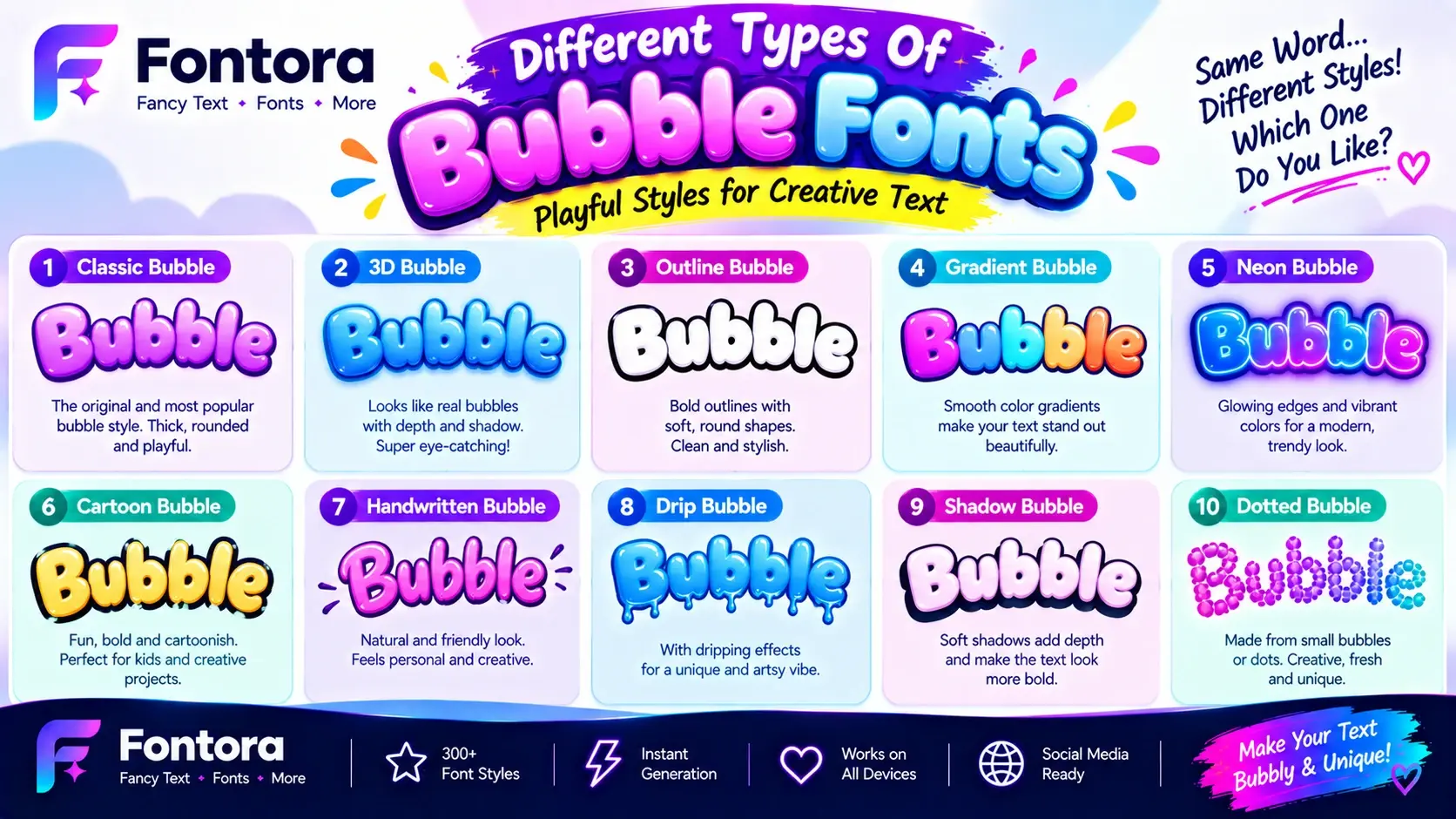
Different Types Of Bubble Fonts
Bubble fonts come in many different styles, and each variation creates a different visual effect. Some bubble styles are simple and clean, while others include creative elements such as shadows, coluors, and artistic details.
Designers choose different bubble font styles depending on the purpose of their project, and a bubble font generator helps create these styles quickly for branding, gaming, social media, posters, and creative artwork.
The most popular types include classic bubble fonts, 3D bubble fonts, cute bubble fonts, and graffiti bubble fonts.
Classic Bubble Fonts
Classic bubble fonts are the original style of bubble lettering. They feature simple rounded letters with thick strokes and smooth curves.
These fonts focus on:
Clear letter shapes
Soft rounded edges
Easy readability
Simple playful appearance
Example:
Normal:
Happy World
Bubble style:
Ⓗⓐⓟⓟⓨ Ⓦⓞⓡⓛⓓ
Uses Of Classic Bubble Fonts
Classic bubble fonts are commonly used for:
School projects
Posters
Children's designs
Creative titles
Social media graphics
They are a great choice when a design needs a fun but simple appearance.
3D Bubble Fonts
3D bubble fonts add depth and dimension to traditional bubble lettering. They use effects such as shadows, highlights, and layered shapes to make letters appear raised or three-dimensional.
Common features include:
Drop shadows
Depth effects
Highlighted surfaces
Layered outlines
Example:
🎈 3D Bubble Style
Uses Of 3D Bubble Fonts
3D bubble fonts are popular for:
Posters
Advertisements
Gaming graphics
Event designs
Digital artwork
They help text become more noticeable and create a stronger visual impact.
For example, a gaming poster may use 3D bubble typography to make the title appear more energetic and dynamic.
Cute Bubble Fonts
Cute bubble fonts focus on creating a soft, friendly, and adorable appearance. They often include rounded letters combined with playful details.
Common characteristics:
Soft shapes
Friendly appearance
Decorative elements
Child-friendly design
Example:
🌸 Cute Style
ⓒⓤⓣⓔ ⓓⓔⓢⓘⓖⓝ
Uses Of Cute Bubble Fonts
Cute bubble fonts are commonly used for:
Children's brands
Baby products
Educational content
Stickers
Greeting cards
Social media designs
They create a warm and positive feeling that helps brands connect with younger audiences.
Graffiti Bubble Fonts
Graffiti bubble fonts are inspired by street art and urban lettering. They combine traditional bubble shapes with bold artistic elements.
They often include:
Thick outlines
Creative effects
Street-style appearance
Unique letter designs
Example:
🎨 Street Bubble Style
𝓑𝓾𝓫𝓫𝓵𝓮 𝓐𝓻𝓽
Uses Of Graffiti Bubble Fonts
Graffiti bubble fonts are popular in:
Streetwear branding
Urban artwork
Music designs
Posters
Creative campaigns
They help communicate:
Energy
Creativity
Individuality
Youth culture
Cartoon Bubble Fonts
Cartoon bubble fonts are inspired by animated characters and entertainment designs.
They usually feature:
Extra rounded shapes
Fun proportions
Playful letter forms
Bright visual style
Common uses:
Animation projects
Children's books
Games
Toy packaging
These fonts help create a friendly and entertaining atmosphere.
Handwritten Bubble Fonts
Handwritten bubble fonts combine the softness of bubble lettering with a personal handwriting style.
They feel:
More natural
More personal
More creative
Common uses:
Personal branding
Social media posts
Creator content
Handmade product designs
They are useful when a designer wants a balance between playful and authentic.
Minimal Bubble Fonts
Minimal bubble fonts simplify the traditional bubble style by removing excessive decorations.
They focus on:
Clean shapes
Simple curves
Better readability
Common uses:
Modern logos
Websites
Digital branding
Professional creative projects
These fonts provide a playful appearance while maintaining a cleaner design.
Choosing The Right Bubble Font Style
The best bubble font depends on your project goal.
Choose:
Classic Bubble Fonts For:
Simple designs
School projects
Friendly content
3D Bubble Fonts For:
Posters
Gaming graphics
Advertisements
Cute Bubble Fonts For:
Children's brands
Stickers
Fun designs
Graffiti Bubble Fonts For:
Streetwear
Music
Urban artwork
Minimal Bubble Fonts For:
Modern branding
Websites
Digital projects
Bubble fonts offer many creative possibilities, from simple rounded lettering to detailed 3D and graffiti-inspired designs. Understanding each style helps designers choose typography that matches their audience, message, and creative goals.
Popular Bubble Font Styles With Examples
Bubble fonts have many creative variations, and each style creates a different visual feeling. Some bubble styles look cute and playful, while others appear bold, modern, or artistic.
Designers choose different bubble fonts based on their goals, such as creating a brand identity, designing social media content, making posters, or developing creative digital artwork.
Cute Bubble Font Style
Cute bubble fonts are designed to create a friendly, soft, and adorable appearance. They usually have smooth rounded letters with simple shapes that feel welcoming.
They are commonly associated with:
Children's designs
Educational content
Fun brands
Creative projects
Example:
Normal:
Cute World
Bubble style:
ⓒⓤⓣⓔ Ⓦⓞⓡⓛⓓ
Common uses:
Baby product branding
Children's books
Stickers
Greeting cards
Social media graphics
Cute bubble fonts help designs feel positive and approachable.
Bold Bubble Font Style
Bold bubble fonts focus on creating strong and noticeable lettering. They use larger shapes and thicker strokes to make text stand out.
Characteristics:
Heavy letter forms
Strong visual impact
Easy recognition
High visibility
Example:
Normal:
Big Ideas
Bubble style:
🅑🅘🅖 🅘🅓🅔🅐🅢
Common uses:
Posters
Advertisements
Headlines
Event banners
Bold bubble fonts are useful when the text needs to attract attention quickly.
Colourful Bubble Font Style
Colourful bubble fonts combine rounded lettering with bright colours and creative effects.
They are often used to create:
Fun designs
Youthful branding
Entertainment graphics
Common design elements:
Multiple colors
Patterns
Gradients
Decorative backgrounds
Popular uses:
Party invitations
Children's brands
Social media posts
Creative campaigns
Colourful bubble typography creates an energetic and cheerful feeling.
3D Bubble Font Style
3D bubble fonts create the illusion that letters are raised from the surface.
They often include:
Shadows
Highlights
Depth effects
Layered outlines
Example:
Normal:
Creative Text
3D bubble style:
🎈 Creative Text
Common uses:
Gaming graphics
YouTube thumbnails
Promotional designs
Digital artwork
3D effects make bubble letters look more realistic and eye-catching.
Cartoon Bubble Font Style
Cartoon bubble fonts are inspired by animated movies, comics, and children's entertainment.
They usually feature:
Exaggerated curves
Playful shapes
Friendly appearance
Creative letter designs
Common uses:
Animation projects
Children's content
Toy packaging
Entertainment brands
These fonts help create a fun and imaginative atmosphere.
Graffiti Bubble Font Style
Graffiti bubble fonts combine traditional bubble lettering with street art influences.
They often include:
Thick outlines
Spray paint effects
Urban designs
Artistic details
Example:
Street Style
𝓢𝓽𝓻𝓮𝓮𝓽 𝓐𝓻𝓽
Common uses:
Streetwear brands
Music artwork
Urban posters
Creative campaigns
Graffiti bubble fonts communicate energy and individuality.
Minimal Bubble Font Style
Minimal bubble fonts keep the rounded appearance but remove excessive decoration.
They focus on:
Clean design
Simple shapes
Better readability
Common uses:
Modern logos
Websites
Digital branding
Professional creative projects
Minimal bubble fonts are useful when a brand wants a playful style without looking overly childish.
Puffy Bubble Font Style
Puffy bubble fonts make letters appear soft, inflated, and three-dimensional.
They create a feeling similar to:
Balloons
Clouds
Soft objects
Common uses:
Children's designs
Cute branding
Merchandise
Fun social media graphics
Example:
☁️ Puffy Style
These fonts create a comfortable and playful visual experience.
Bubble Font Styles For Different Projects
For Children's Brands
Recommended:
Cute bubble fonts
Cartoon bubble fonts
Colourful bubble fonts
Why:
They create friendly and positive emotions.
For Gaming Designs
Recommended:
3D bubble fonts
Bold bubble fonts
Graffiti bubble fonts
Why:
They create unique and energetic visuals.
For Social Media Content
Recommended:
Colourful bubble fonts
Cute bubble fonts
Modern bubble fonts
Why:
They help posts stand out visually.
For Logos
Recommended:
Minimal bubble fonts
Bold bubble fonts
Modern bubble fonts
Why:
They create memorable brand identities.
How To Choose The Best Bubble Font Style
Before selecting a bubble font, consider:
Audience
A children's audience may prefer cute and colourful styles, while a modern brand may need a cleaner design.
Purpose
Choose a style based on where the text will appear:
Logo
Poster
Website
Social media
Product packaging
Readability
Make sure the bubble font remains easy to understand, especially for important messages.
Bubble font styles provide endless creative options, from cute and playful designs to bold and modern typography. Choosing the right bubble style helps designers create visuals that match their message, audience, and creative goals.
Where Are Bubble Fonts Used?
Bubble fonts are widely used in creative industries because they create a friendly, playful, and memorable visual style. Their rounded shapes and bold appearance make them effective for designs that need to attract attention and communicate positive emotions.
From children's brands and gaming communities to social media content and product packaging, bubble typography helps designers create a unique identity that feels approachable and creative.
Bubble Fonts In Children's Brands
Children's brands are one of the biggest users of bubble typography because these fonts naturally create a fun and welcoming feeling.
Bubble fonts are commonly used for:
Toy brands
Educational products
Children's books
Cartoon characters
Learning websites
They work well because children are naturally attracted to:
Bright designs
Rounded shapes
Friendly visuals
Playful lettering
Example:
A toy company may use colourful bubble lettering to make its logo appear more exciting and memorable.
Bubble fonts help children's brands communicate:
Happiness
Creativity
Imagination
Fun
Bubble Fonts In Social Media
Social media platforms have increased the popularity of bubble fonts because users want their content to stand out.
Creators use bubble typography for:
Instagram posts
TikTok videos
Pinterest graphics
YouTube thumbnails
Profile designs
Bubble fonts help social media content appear:
More eye-catching
More creative
More engaging
Common examples include:
Quote graphics
Announcement posts
Highlight covers
Creative captions
A unique bubble font style can help creators build a recognisable visual identity online.
Bubble Fonts In Gaming
Gaming communities often use bubble fonts to create fun and unique digital identities.
They are commonly used for:
Gaming usernames
Team names
Streaming channels
Game artwork
Bubble fonts can make gaming profiles feel:
Creative
Friendly
Different
Memorable
Example:
🎮 🅑🅤🅑🅑🅛🅔 🅖🅐🅜🅔🅡
Unlike aggressive gothic or futuristic fonts, bubble styles create a more playful gaming personality.
They are especially popular for:
Casual games
Mobile games
Children's gaming content
Creative gaming communities
Bubble Fonts In Logos And Branding
Typography plays an important role in brand recognition. Bubble fonts help businesses create a friendly and approachable brand image.
They are commonly used by:
Food brands
Children's companies
Creative businesses
Entertainment brands
Lifestyle companies
Bubble logos often communicate:
Friendliness
Accessibility
Creativity
Youthfulness
For example:
A snack brand may use rounded bubble lettering because it creates a fun and positive feeling around the product.
Bubble Fonts In Posters And Advertisements
Bubble fonts are effective in posters because their bold shapes attract attention quickly.
They are commonly used for:
Event posters
Party invitations
Promotional banners
School events
Creative campaigns
Their large and rounded appearance helps important messages stand out.
Common design combinations include:
Bubble headline + simple body text
3D bubble letters + colourful backgrounds
Cartoon bubble style + illustrations
Bubble Fonts In Product Packaging
Packaging design depends on visual appeal, and bubble fonts can help products appear more attractive.
Common uses:
Candy packaging
Children's products
Beauty products
Creative merchandise
Fun lifestyle products
Bubble typography can make products feel:
Friendly
Fun
Approachable
Memorable
A strong packaging design can influence how customers perceive a product before they even try it.
Bubble Fonts In Digital Artwork
Artists and designers use bubble fonts to add personality to digital creations.
Common applications include:
Illustrations
Wallpapers
Digital posters
Stickers
Merchandise designs
Bubble lettering works well with:
Characters
Cartoon elements
Colourful backgrounds
Creative illustrations
It helps create a complete visual story rather than just displaying text.
Bubble Fonts In Websites
Bubble fonts can be used in website design, but they should be applied strategically.
They work best for:
Logo designs
Homepage headings
Promotional sections
Creative landing pages
Avoid using bubble fonts for:
Long paragraphs
Navigation menus
Detailed information sections
A good website combines creative typography with readable fonts to maintain a strong user experience.
Bubble Fonts In Education And Learning Materials
Educational designers often use bubble fonts because they create a friendly environment for learners.
Common uses:
Worksheets
Learning apps
Classroom posters
Children's educational websites
The playful appearance helps make learning materials more engaging and visually interesting.
Choosing Bubble Fonts For Different Projects
For Children's Content
Best choices:
Cute bubble fonts
Cartoon bubble fonts
Colourful bubble fonts
Purpose:
Create a friendly and fun experience.
For Social Media
Best choices:
Modern bubble fonts
Bold bubble fonts
Colourful bubble fonts
Purpose:
Make content more noticeable.
For Branding
Best choices:
Minimal bubble fonts
Bold bubble fonts
Purpose:
Create a memorable and approachable identity.
For Gaming
Best choices:
3D bubble fonts
Graffiti bubble fonts
Bold bubble fonts
Purpose:
Create a unique digital personality.
Bubble fonts are powerful because they combine creativity, readability, and emotional appeal. Whether used in branding, social media, gaming, packaging, or digital artwork, they help designs feel more engaging and memorable.
Bubble Fonts vs Regular Fonts: Which One Should You Use?
Bubble fonts and regular fonts serve different purposes in typography. Bubble fonts focus on creativity, friendliness, and visual expression, while regular fonts focus on readability, simplicity, and professional communication.
The right choice depends on your design goal, audience, and where the text will be used. Understanding font psychology helps designers choose typography that matches the emotions, personality, and message they want to communicate.
What Are Bubble Fonts?
Bubble fonts are decorative typography styles that use rounded shapes, thick strokes, and soft edges to create a playful appearance.
They are commonly used for:
Children's designs
Logos
Social media graphics
Gaming profiles
Posters
Creative artwork
Bubble fonts communicate feelings such as:
Fun
Creativity
Happiness
Friendliness
Youthfulness
Example:
Normal:
Happy World
Bubble style:
Ⓗⓐⓟⓟⓨ Ⓦⓞⓡⓛⓓ
What Are Regular Fonts?
Regular fonts are standard typography styles designed for clear communication and easy reading.
Examples include:
Arial
Helvetica
Roboto
Times New Roman
They are commonly used in:
Websites
Blog articles
Business documents
Applications
Educational materials
Regular fonts focus on:
Readability
Simplicity
Professional appearance
Clear information delivery
Main Differences Between Bubble Fonts And Regular Fonts
Visual Appearance
Bubble Fonts:
Rounded letter shapes
Thick strokes
Soft edges
Playful appearance
Decorative style
Regular Fonts:
Structured letter forms
Clean appearance
Balanced spacing
Professional design
Bubble fonts attract attention, while regular fonts help users read information easily.
Purpose And Usage
Bubble Fonts
Bubble fonts are mainly used for creative expression.
Common uses:
Brand logos
Children's products
Social media content
Posters
Gaming designs
Creative campaigns
They are chosen when a design needs personality and emotional connection.
Regular Fonts
Regular fonts are mainly used for communication.
Common uses:
Website paragraphs
Articles
Reports
Product descriptions
User interfaces
They are designed to make information easy to understand.
Readability Comparison
Regular fonts usually provide better readability because they are created for long-form content.
They work best for:
Blog posts
Books
Educational content
Website information
Bubble fonts are better for short text because their decorative shapes can become difficult to read when used extensively.
Best uses:
Headlines
Logos
Short messages
Decorative elements
Emotional Impact
Typography affects how people feel when they see a design.
Bubble Fonts Create Feelings Of:
Fun
Excitement
Creativity
Friendliness
Playfulness
Example:
A children's toy brand using bubble typography feels more approachable.
Regular Fonts Create Feelings Of:
Trust
Professionalism
Stability
Simplicity
Example:
A financial website usually uses clean fonts to appear reliable.
When Should You Use Bubble Fonts?
Bubble fonts are a good choice when your goal is to create an attractive and friendly visual identity.
Use bubble fonts for:
Children's Brands
Examples:
Toys
Learning products
Kids' apps
Why:
The rounded shapes feel safe and playful.
Social Media Content
Examples:
Instagram graphics
TikTok covers
Creative posts
Why:
They help content stand out visually.
Gaming Designs
Examples:
Usernames
Game channels
Community graphics
Why:
They create a unique and memorable style.
Creative Logos
Examples:
Food brands
Entertainment companies
Lifestyle businesses
Why:
They create a friendly brand personality.
When Should You Use Regular Fonts?
Regular fonts are better when your main goal is clear communication.
Use regular fonts for:
Website Content
Visitors need comfortable reading experiences.
Blog Articles
Long-form content requires simple and readable typography.
Business Communication
Professional documents need clear presentation.
Applications And Interfaces
Users need quick understanding and easy navigation.
Can Bubble Fonts And Regular Fonts Be Combined?
Yes, professional designers often combine both styles to create balanced designs.
A common combination is:
Bubble Font
Used for:
Logo
Main heading
Creative elements
Regular Font
Used for:
Paragraphs
Descriptions
Supporting information
Example:
Heading:
🅑🅤🅑🅑🅛🅔 🅢🅣🅤🅓🅘🅞
Body:
Creative designs made for modern digital experiences.
This combination creates both visual appeal and readability.
Bubble Fonts vs Regular Fonts For Websites
For website design, the best approach is usually balance.
Use bubble fonts for:
Logo
Hero sections
Promotional banners
Creative headings
Use regular fonts for:
Blog content
Navigation menus
Product descriptions
Important information
A website should look creative while still providing a smooth reading experience.
Which Font Style Is Better?
Neither bubble fonts nor regular fonts are always better. Each style has a specific purpose.
Choose bubble fonts when you need:
Creativity
Fun personality
Friendly branding
Visual attention
Choose regular fonts when you need:
Clear communication
Professional appearance
Easy reading
Better accessibility
The strongest designs use both styles strategically.
Understanding the difference between bubble fonts and regular fonts helps designers make better typography choices. Bubble fonts bring creativity and personality, while regular fonts provide structure and readability. Combining both styles allows brands and creators to build designs that are attractive, effective, and easy to understand.
Are Bubble Fonts Good For Websites?
Bubble fonts can be a great addition to website design when they are used correctly. Their rounded shapes and playful appearance help websites feel more creative, friendly, and memorable.
However, bubble fonts should be used strategically because their decorative nature can affect readability. Professional designers usually combine bubble typography with simple and readable fonts to create a balanced user experience.
When Should You Use Bubble Fonts On Websites?
Bubble fonts work best when they are used for visual elements rather than large amounts of text.
They are suitable for:
Website logos
Hero section headings
Promotional banners
Creative landing pages
Special announcements
Brand slogans
For example, a children's education website may use bubble typography in its main heading to create a friendly and welcoming feeling.
Bubble Fonts For Website Logos
Logos are one of the best places to use bubble fonts because they need to be memorable and visually recognisable.
Bubble logo designs can help brands communicate:
Friendliness
Creativity
Fun
Approachability
Industries that can benefit from bubble-style logos include:
Children's products
Food brands
Entertainment companies
Creative businesses
Lifestyle brands
A rounded logo design can make a brand feel more accessible and enjoyable.
Bubble Fonts For Website Headings
Bubble fonts can make website headings more attractive and attention-grabbing.
They work well for:
Homepage headlines
Promotional messages
Creative section titles
Special offers
Example:
Regular heading:
Welcome To Our Creative World
Bubble heading:
🅦🅔🅛🅒🅞🅜🅔 🅣🅞 🅞🅤🅡 🅒🅡🅔🅐🅣🅘🅥🅔 🅦🅞🅡🅛🅓
A bubble heading can immediately create a fun and energetic first impression.
Why You Should Avoid Bubble Fonts For Long Text
Although bubble fonts look attractive, they are not usually suitable for long paragraphs.
Avoid using bubble fonts for:
Blog articles
Product descriptions
Navigation menus
Detailed instructions
Large content sections
Reasons:
Rounded shapes can slow reading
Decorative designs may reduce clarity
Users may find long text tiring
For body content, websites should use clean serif or sans serif fonts for better readability.
Best Font Combinations With Bubble Fonts
Professional websites often combine bubble fonts with simple typography styles.
A common combination:
Bubble Font
Used for:
Logo
Main heading
Creative elements
Sans Serif Font
Used for:
Paragraphs
Navigation
Buttons
Product information
Example:
Heading:
🅑🅤🅑🅑🅛🅔 🅢🅣🅤🅓🅘🅞
Body:
Creative digital designs made for modern audiences.
This creates a balance between creativity and usability.
Bubble Fonts And User Experience
Website typography affects how visitors interact with content. A visually attractive website should also provide a comfortable reading experience.
Good typography improves:
User engagement
Content understanding
Brand perception
Navigation experience
Bubble fonts can improve design appeal when they support the overall website style without making content difficult to read.
Bubble Fonts And Brand Identity
Typography plays an important role in how customers perceive a brand.
Bubble fonts can help brands appear:
Friendly
Young
Creative
Approachable
For example:
A children's learning platform may use bubble typography to create a fun educational environment.
A professional finance company would usually choose a cleaner font style to communicate trust and reliability.
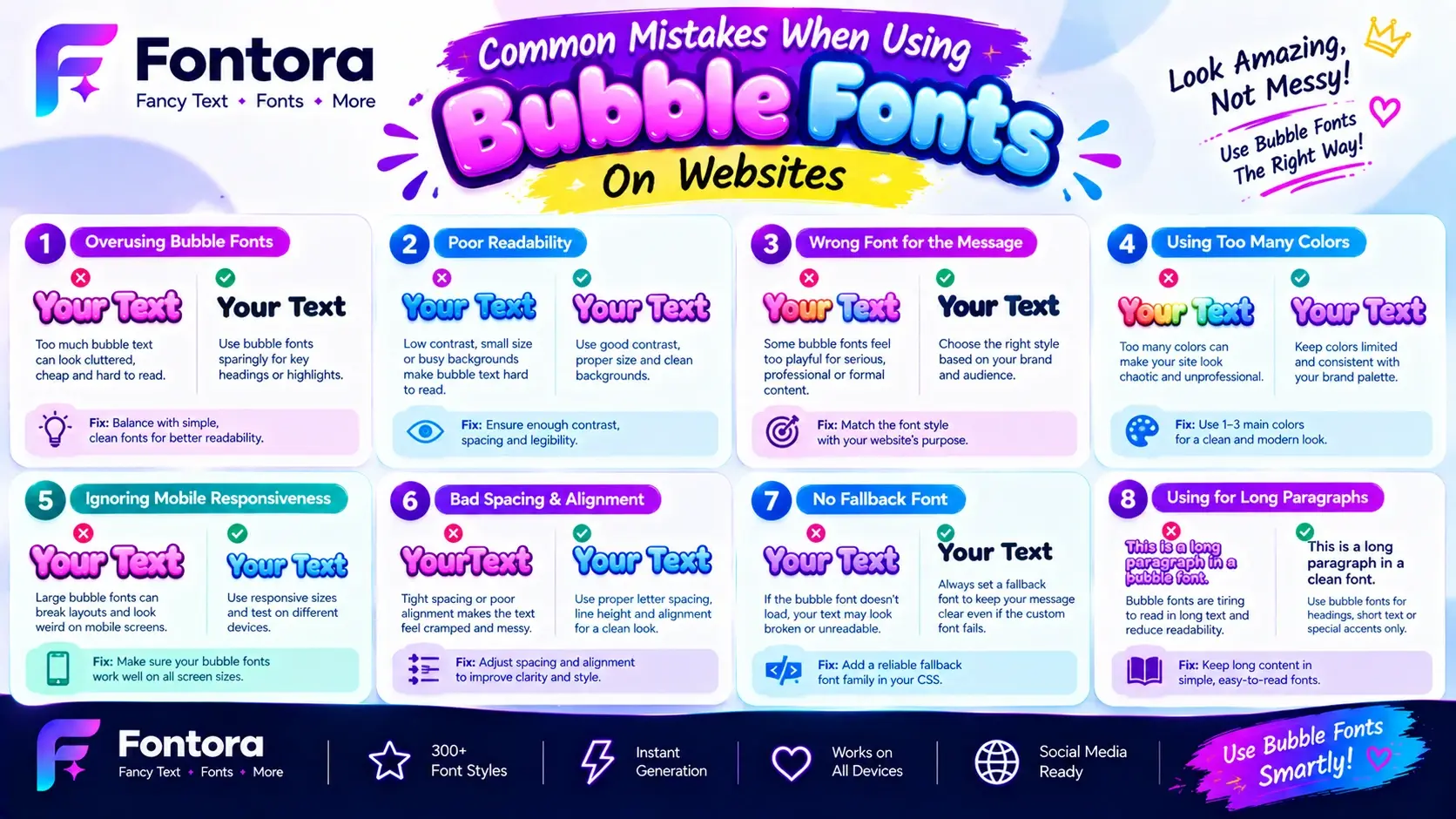
Common Mistakes When Using Bubble Fonts On Websites
Using Bubble Fonts Everywhere
A website filled completely with bubble typography can become difficult to read and may look unprofessional.
Better approach:
Use bubble fonts only for important visual elements.
Choosing Overly Decorative Bubble Fonts
Some bubble styles include too many effects that reduce clarity.
Choose fonts with:
Clear letter shapes
Balanced spacing
Good screen visibility
Ignoring Mobile Users
Many visitors browse websites through smartphones.
Always check how bubble fonts appear on:
Mobile devices
Tablets
Different screen sizes
A design that looks good on desktop may become unclear on smaller screens.
Mixing Too Many Font Styles
Using too many typography styles can make a website look inconsistent.
A professional website usually uses:
One main heading style
One body font
One optional decorative font
Best Practices For Using Bubble Fonts On Websites
Follow these guidelines:
Use Bubble Fonts For Short Text
Best for:
Logos
Titles
Headings
Promotional messages
Maintain Readability
Creative typography should improve the design, not make information harder to understand.
Match The Brand Personality
Choose a bubble font style that fits your audience and business goals.
Balance Creativity With Simplicity
Combine playful bubble fonts with clean typography for a professional result.
Test Across Devices
Always review your website typography on different screens before publishing.
Are Bubble Fonts SEO Friendly?
Bubble fonts themselves do not directly improve search engine rankings. Search engines focus on factors such as:
Content quality
Website structure
Technical SEO
User experience
However, good typography can indirectly support SEO by improving:
User engagement
Time spent on pages
Visual experience
Brand recognition
A well-designed website encourages visitors to stay longer and interact with content.
Bubble fonts can make websites more creative and memorable when used strategically. The best approach is to use them for logos, headings, and decorative elements while keeping the main content readable with simple typography.
How To Create Bubble Text With Fontora
Creating bubble text is a simple way to transform ordinary words into fun, rounded, and eye-catching typography. A bubble font generator allows users to create playful text styles without needing advanced graphic design skills or professional editing software.
With Fontora, users can explore different bubble styles and create unique text for social media posts, gaming profiles, logos, branding ideas, posters, and creative digital projects.
Step 1: Enter Your Text
The first step is choosing the text you want to transform into a bubble style.
You can create bubble text for:
Names
Usernames
Brand names
Social media captions
Quotes
Headlines
Creative messages
Examples:
Normal text:
Happy Studio
Brand name:
Creative World
Gaming name:
Bubble Gamer
Short words and phrases usually create the best results because bubble typography focuses on visual impact.
Step 2: Select A Bubble Font Style
After entering your text, choose a bubble style that matches your project.
Different styles create different impressions.
Cute Bubble Style
Best for:
Children's designs
Educational content
Fun projects
Example:
ⓒⓤⓣⓔ ⓢⓣⓨⓛⓔ
This style creates a soft and friendly appearance.
3D Bubble Style
Best for:
Gaming graphics
Posters
Promotional designs
Features:
Depth effects
Shadows
Layered appearance
This style makes text look more dynamic and noticeable.
Graffiti Bubble Style
Best for:
Streetwear designs
Urban artwork
Creative campaigns
Features:
Bold outlines
Artistic appearance
Street-inspired design
Minimal Bubble Style
Best for:
Modern logos
Websites
Digital branding
Features:
Simple shapes
Clean appearance
Better readability
Step 3: Generate Your Bubble Text
A bubble text generator converts normal words into creative bubble-style typography.
The process is simple:
Enter your text
The tool creates different bubble variations
Choose your preferred style
Copy the generated result
Example:
Input:
Creative Ideas
Output:
Ⓒⓡⓔⓐⓣⓘⓥⓔ Ⓘⓓⓔⓐⓢ
The meaning remains the same while the visual style becomes more attractive and playful.
Step 4: Copy And Use Your Bubble Text
After creating your bubble text, you can use it across different platforms.
Social Media Profiles
Bubble text can be used for:
Instagram bios
TikTok usernames
Pinterest designs
Facebook posts
Example:
✨ Ⓗⓐⓟⓟⓨ Ⓥⓘⓑⓔⓢ
Gaming Profiles
Create unique names for:
Game accounts
Streaming channels
Community profiles
Example:
🎮 Ⓑⓤⓑⓑⓛⓔ Ⓖⓐⓜⓔⓡ
Branding Projects
Businesses can use bubble typography ideas for:
Logo concepts
Product names
Marketing designs
Creative campaigns
Step 5: Check Readability Before Using
A creative bubble style should still be easy to understand.
Before publishing, check:
Are the letters clear?
Does the style match your audience?
Does it display correctly on different devices?
Is the design suitable for the platform?
Avoid extremely complex bubble styles that make words difficult to recognise.
Why Use Fontora For Bubble Text?
Fontora helps users quickly create playful typography styles without manually designing each letter.
Users can create:
Cute bubble names
Creative usernames
Social media text
Logo inspiration
Digital artwork ideas
The tool makes it easier to experiment with different bubble styles and find a design that matches your creative purpose.
Tips For Creating Better Bubble Text
Choose Short Text
Bubble styles work best with:
Names
Titles
Short phrases
Brand messages
Long sentences can reduce the visual effect.
Match The Style With The Purpose
Choose:
Cute bubble fonts for children's designs.
3D bubble fonts for posters and gaming.
Graffiti bubble fonts for urban artwork.
Minimal bubble fonts for modern branding.
Use Colours And Effects Carefully
Bubble typography works well with:
Bright colours
Shadows
Outlines
Creative backgrounds
However, too many effects can make the design look crowded.
Where Can You Use Bubble Text?
Bubble text created with Fontora can be used for:
Social media content
Gaming profiles
Creative logos
Posters
Digital artwork
Product designs
Online communities
Its playful appearance makes it useful for both personal and professional creative projects.
Bubble text allows users to transform simple words into fun and memorable designs. With Fontora, anyone can explore bubble typography styles, generate creative text, and create designs that feel unique, friendly, and visually engaging.
Conclusion: Use Bubble Fonts To Create Fun And Memorable Designs
Bubble fonts are a creative typography style that transforms ordinary text into a playful and visually attractive design element. With their rounded shapes, bold strokes, and friendly appearance, bubble fonts help brands, designers, and creators communicate positivity, creativity, and personality.
From children's brands and educational materials to gaming profiles, social media graphics, posters, and product packaging, bubble typography has become a popular choice for projects that need a fun and approachable visual style.
Different bubble font styles offer different creative possibilities. Cute bubble fonts create a friendly feeling, 3D bubble fonts add depth and impact, graffiti bubble fonts bring an artistic street style, and minimal bubble fonts provide a cleaner modern look.
The best results come from choosing the right bubble font based on your audience, platform, and design purpose. While bubble fonts work perfectly for logos, headings, and decorative elements, readable fonts should be used for longer content to maintain a strong user experience.
Whether you are creating a brand identity, designing social media content, making gaming graphics, or exploring creative typography ideas, bubble fonts provide an excellent way to make your text more engaging, memorable, and visually unique.
Frequently Asked Questions About Bubble Fonts
What are bubble fonts?
Bubble fonts are decorative typography styles that use rounded shapes, thick strokes, and soft edges to create a playful appearance. They are commonly used in children's designs, logos, social media graphics, gaming profiles, posters, packaging, and creative digital projects.
Are bubble fonts good for logos?
Yes, bubble fonts can work well for logos when a brand wants to appear friendly, creative, and approachable. They are especially suitable for children's brands, entertainment companies, food businesses, lifestyle brands, and creative businesses.
Where are bubble letters commonly used?
Bubble letters are commonly used in:
Children's books
School projects
Social media graphics
Gaming usernames
Posters
Product packaging
Brand designs
They are popular because their rounded appearance creates a fun and memorable visual style.
Are bubble fonts suitable for websites?
Bubble fonts can be effective on websites when used for logos, headings, hero sections, and decorative elements. They should generally not be used for long paragraphs because their playful shapes may reduce readability.
Are bubble fonts free to use?
Many bubble fonts and bubble text generators are available for free. However, some professional bubble font files may require a license for commercial use, depending on the creator's usage terms.
How can I create bubble text online?
You can create bubble text online by using a bubble font generator. Enter your text, select a bubble style, generate the design, and copy the result for use in social media profiles, usernames, creative projects, or branding ideas.
Why are bubble fonts popular?
Bubble fonts are popular because they create a positive and friendly feeling. Their rounded shapes and playful appearance help designs look more creative, approachable, and memorable.
Can bubble fonts be used for gaming names?
Yes, bubble fonts are commonly used for gaming names and profiles. They help players create unique and recognizable usernames, especially in casual games, creative communities, and social gaming platforms.
What is the difference between bubble fonts and cartoon fonts?
Bubble fonts focus mainly on rounded, inflated-looking letters, while cartoon fonts include a wider range of playful styles inspired by animation and comic designs. Many cartoon fonts use bubble-style elements, but they can also include other creative shapes.
Are bubble fonts good for children's designs?
Yes, bubble fonts are highly suitable for children's designs because their soft curves and friendly appearance create a fun and welcoming visual experience. They are commonly used for toys, educational materials, children's websites, and activity books.