 By Hamza
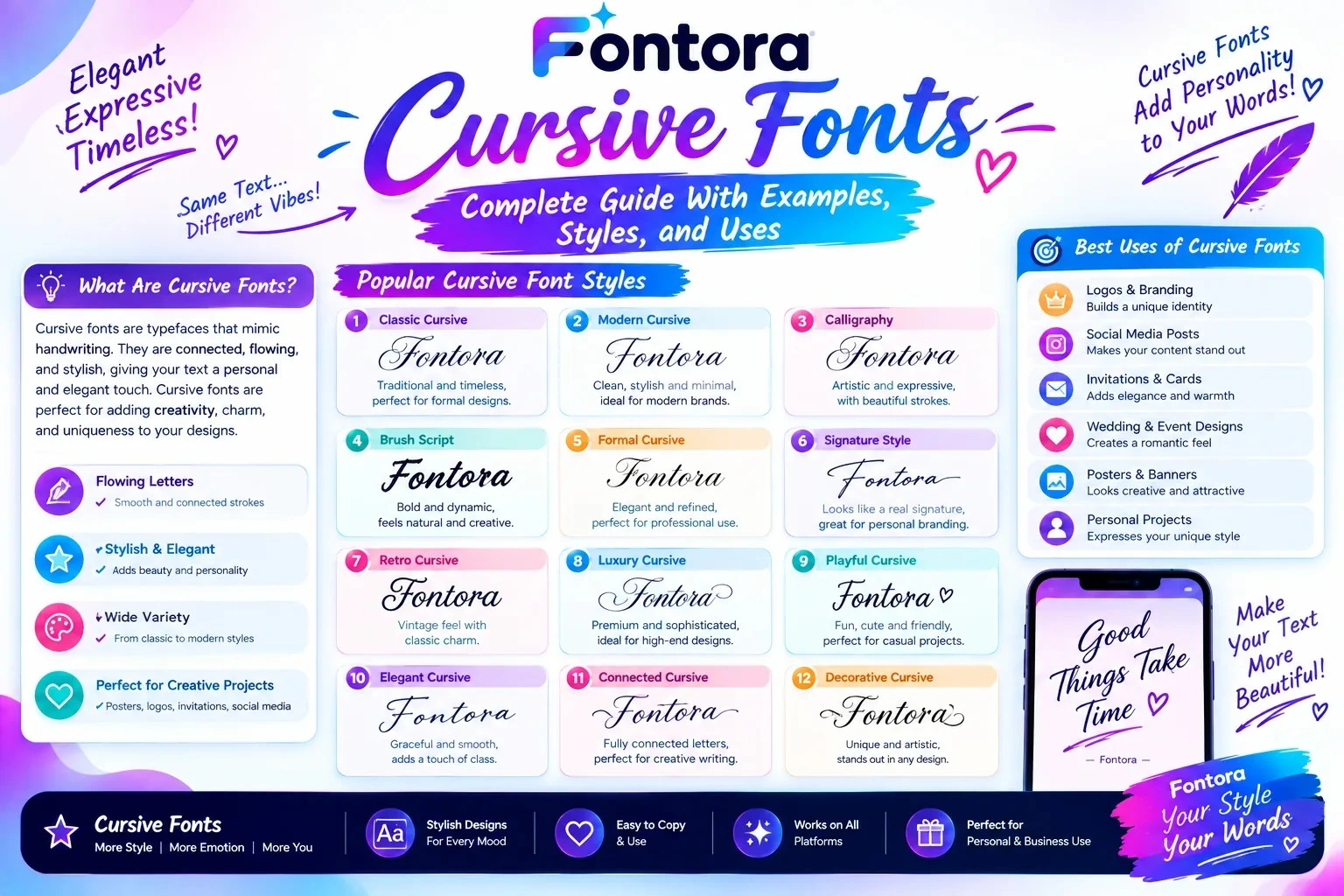
Cursive fonts are typography styles designed to look like natural handwriting, where letters often flow and connect together. They are commonly used in logos, invitations, branding, social media designs, and creative projects to create an elegant, personal, and artistic appearance.
Cursive Fonts: Complete Guide With Examples, Styles, and Uses
Introduction
Cursive fonts are a beautiful typography style inspired by natural handwriting and artistic lettering. Designers, brands, and creators use cursive typography to add elegance, creativity, and personality to logos, invitations, websites, social media, and digital content.
These flowing letter designs connect traditional handwriting with modern graphic design, creating a unique visual experience for audiences. From luxury branding and wedding invitations to creative projects and online profiles, cursive fonts help communicate emotion and style.
In this complete guide, you will discover different cursive font styles, their characteristics, examples, common uses, and how to create stylish cursive text for your own designs.
What Are Cursive Fonts?
Cursive fonts are a type of script typography that imitates handwritten lettering. Unlike standard fonts with separate and structured characters, cursive fonts usually feature flowing strokes, connected letters, and smooth curves that create a natural handwriting effect.
The word "cursive" comes from the idea of writing by hand in a continuous motion. Traditional handwriting styles inspired modern digital cursive fonts, allowing designers and creators to use elegant lettering in digital designs.
Cursive typography is often associated with:
Elegance
Creativity
Personal expression
Luxury
Artistic design
Because of these qualities, cursive fonts are widely used when a design needs a human touch or emotional connection.
History And Evolution Of Cursive Fonts
Cursive lettering has its roots in handwritten scripts used for centuries. Before digital typography existed, people created decorative writing styles using pens, ink, and calligraphy techniques.
Over time, these handwritten styles influenced typography designers who created digital versions of cursive fonts. Understanding different font styles helps designers choose the right typography for various creative purposes.
The evolution moved through:
Traditional Handwriting
Early cursive styles focused on practical handwriting where letters connected naturally for faster writing.
Calligraphy
Artists developed more decorative writing techniques with detailed strokes and artistic letter shapes.
Digital Typography
Modern designers transformed handwriting styles into digital fonts used in:
Websites
Logos
Applications
Social media
Marketing designs
Today, cursive fonts combine traditional handwriting aesthetics with modern design requirements.
Characteristics Of Cursive Fonts
Cursive fonts have several unique features that separate them from regular typography styles.
Connected Letter Forms
Many cursive fonts connect letters together to create a smooth handwriting appearance.
Example:
Normal:
Creative Design
Cursive style:
𝓒𝓻𝓮𝓪𝓽𝓲𝓿𝓮 𝓓𝓮𝓼𝓲𝓰𝓷
Flowing Strokes
Cursive typography uses curved and flowing lines that create movement and elegance.
Personal Handwritten Feeling
Unlike standard fonts, cursive styles often feel more personal because they are inspired by human handwriting.
Decorative Appearance
Many cursive fonts include artistic details such as:
Elegant curves
Extended strokes
Unique letter shapes
Creative variations
These elements make them suitable for visual designs.
Cursive Fonts vs Script Fonts
Cursive fonts and script fonts are closely related, but they are not always exactly the same.
Cursive fonts:
Usually imitate connected handwriting
Have flowing letter forms
Focus on natural writing styles
Script fonts:
Include a wider range of handwritten styles
Can be formal, decorative, or artistic
Often include calligraphy-inspired designs
In simple terms:
All cursive fonts are script-inspired, but not all script fonts are traditional cursive styles.
Why Are Cursive Fonts Popular?
Cursive fonts remain popular because they add emotion and personality to written content.
They help designs feel:
More human
More creative
More memorable
More elegant
A simple phrase written in a cursive style can create a completely different impression compared to standard text.
For example:
Regular:
Luxury Collection
Cursive:
𝓛𝓾𝔁𝓾𝓻𝔂 𝓒𝓸𝓵𝓵𝓮𝓬𝓽𝓲𝓸𝓷
The second style creates a more premium and artistic feeling.
How Do Cursive Fonts Work?
Cursive fonts work by transforming traditional handwriting characteristics into digital typography. They use carefully designed letter shapes, flowing strokes, and connected characters to create a natural handwritten appearance while maintaining consistency across digital platforms.
Designers create cursive fonts by studying handwriting patterns and converting those visual elements into digital font files that can be used in websites, applications, logos, and creative designs.
How Cursive Letters Connect Together
The main feature of cursive fonts is the connection between letters. In traditional handwriting, people write words in a continuous motion, allowing letters to naturally flow into one another.
Digital cursive fonts recreate this effect through:
Connected letter shapes
Smooth curves
Extended strokes
Balanced spacing
For example:
Normal typography:
Creative
Cursive style:
𝓒𝓻𝓮𝓪𝓽𝓲𝓿𝓮
The connected appearance creates a more personal and artistic feeling.
The Role Of Typography Design In Cursive Fonts
Creating a cursive font requires careful typography design. Font designers consider several elements to make the letters visually balanced.
Important design elements include:
Letter Shape
Each character must maintain a consistent style while looking natural.
Stroke Thickness
Designers adjust line thickness to create different feelings:
Thin strokes create elegance
Thick strokes create boldness
Spacing
Proper spacing ensures that connected letters remain readable.
Character Compatibility
Every letter combination should work smoothly together.
For example, the connection between "a" and "r" should look natural instead of creating awkward spaces.
Cursive Fonts In Digital Typography
Modern cursive fonts are created as digital typography files that allow designers to use handwritten styles on computers and digital platforms.
Common font formats include:
OTF (OpenType Font)
TTF (TrueType Font)
WOFF (Web Open Font Format)
These formats allow cursive fonts to be used in:
Websites
Graphic design software
Mobile applications
Branding projects
Web designers can integrate cursive typography while maintaining consistent appearance across different devices.
Font Files vs Unicode Cursive Text
There are two common ways people use cursive-style text online:
Traditional Cursive Font Files
These are actual font files installed or loaded into a design system.
Examples:
Website typography
Logo design
Graphic design software
Advantages:
Professional appearance
Complete character support
Better control over design
Used by:
Designers
Developers
Brands
Unicode Cursive Text
Unicode cursive text uses special characters that look like different font styles but are actually separate characters recognised by computers.
Example:
Normal:
Creative
Unicode style:
𝓒𝓻𝓮𝓪𝓽𝓲𝓿𝓮
Advantages:
Easy copy and paste
Works on many social platforms
No installation required
Common uses:
Instagram bios
TikTok profiles
Discord usernames
Social media captions
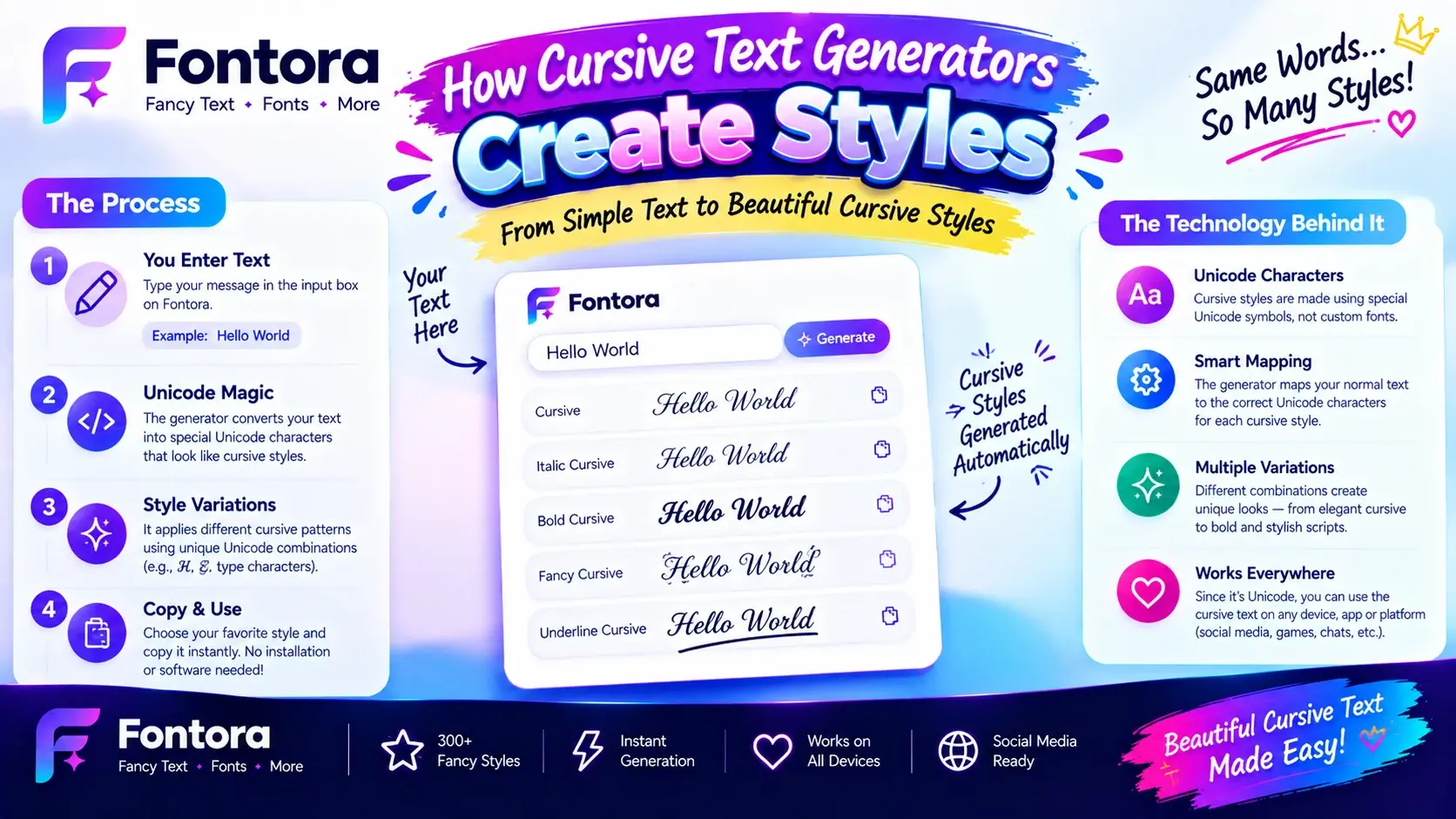
How Cursive Text Generators Create Styles
A cursive text generator converts normal letters into visually similar Unicode characters or styled text variations.
The process usually involves:
User enters normal text
The generator matches characters with available cursive-style characters
The system creates a new styled version
User copies and uses the generated text
For example:
Input:
Beautiful Name
Output:
𝓑𝓮𝓪𝓾𝓽𝓲𝓯𝓾𝓵 𝓝𝓪𝓶𝓮
This allows users to create stylish text quickly without designing letters manually.
Limitations Of Unicode Cursive Text
Although Unicode cursive text is useful, it has some limitations.
Possible issues include:
Not every character has a matching style
Some devices may display characters differently
Complex symbols may affect readability
For professional designs such as logos and websites, designers usually prefer real font files because they provide more control. Understanding the difference between fancy text vs fonts helps users choose the right option for their creative needs.
For social media customization, Unicode cursive text is often a convenient solution.
Why Cursive Fonts Look Elegant
Cursive fonts create an elegant appearance because they are connected with traditional handwriting and artistic expression.
They often communicate:
Creativity
Personal connection
Sophistication
Warmth
Luxury
This makes them especially popular in industries such as:
Fashion
Beauty
Wedding design
Personal branding
Creative businesses
Understanding how cursive fonts work helps users choose the right typography method. Whether using professional font files for design projects or Unicode cursive text for social media profiles, cursive typography provides a unique way to add personality and creativity to written content.
Different Types of Cursive Fonts
Cursive fonts come in many styles, and each style creates a different visual impression. Some cursive fonts focus on traditional handwriting, while others are designed for modern branding, digital content, and creative projects.
Designers choose different cursive styles based on the purpose, audience, and emotion they want to communicate. The most popular categories include traditional cursive, modern cursive, brush cursive, and calligraphy fonts.
Traditional Cursive Fonts
Traditional cursive fonts are inspired by classic handwriting styles used for formal writing and elegant documents. They recreate the natural flow of handwritten letters with connected characters and smooth strokes.
These fonts often create a feeling of:
Elegance
History
Formality
Personal touch
Traditional cursive styles are commonly used in:
Wedding invitations
Certificates
Formal documents
Personal letters
Classic branding
Examples of traditional cursive designs:
𝓔𝓵𝓮𝓰𝓪𝓷𝓽 𝓦𝓻𝓲𝓽𝓲𝓷𝓰
𝒞𝓁𝒶𝓈𝓈𝒾𝒸 𝒮𝓉𝓎𝓁𝑒
These fonts work best when a design needs a timeless and sophisticated appearance.
Modern Cursive Fonts
Modern cursive fonts combine traditional handwriting inspiration with contemporary design elements. They usually have cleaner shapes, improved readability, and a more digital-friendly appearance.
Modern cursive styles are popular because they feel:
Fresh
Creative
Stylish
Approachable
Common uses include:
Social media graphics
Personal branding
Websites
Creative businesses
Digital advertisements
Examples:
𝓜𝓸𝓭𝓮𝓻𝓷 𝓢𝓽𝔂𝓵𝓮
𝓒𝓻𝓮𝓪𝓽𝓲𝓿𝓮 𝓘𝓭𝓮𝓪𝓼
Modern cursive fonts are especially useful for creators who want a balance between elegance and readability.
Brush Cursive Fonts
Brush cursive fonts imitate handwriting created with brushes, markers, or artistic tools. They usually feature uneven strokes and expressive letter shapes that create a handmade feeling.
These fonts are known for:
Artistic expression
Energy
Creativity
Natural appearance
Brush cursive fonts are commonly used in:
Poster designs
Fashion branding
Product packaging
Creative advertisements
Artwork
Examples:
𝓑𝓻𝓾𝓼𝓱 𝓢𝓽𝔂𝓵𝓮
𝓒𝓻𝓮𝓪𝓽𝓲𝓿𝓮 𝓐𝓻𝓽
They are ideal when designers want a more personal and handmade appearance.
Calligraphy Fonts
Calligraphy fonts are highly decorative cursive styles inspired by professional handwriting and artistic lettering techniques.
They often include:
Elegant curves
Decorative strokes
Detailed letter shapes
Premium appearance
Calligraphy fonts are widely used for:
Luxury branding
Wedding invitations
Event designs
Premium product packaging
Certificates
Examples:
𝓛𝓸𝓿𝓮
𝓔𝓵𝓮𝓰𝓪𝓷𝓽 𝓓𝓮𝓼𝓲𝓰𝓷
Calligraphy fonts create a sophisticated and artistic feeling, making them popular for designs that require a premium look.
Casual Cursive Fonts
Casual cursive fonts are designed to look like everyday handwriting. They feel friendly, relaxed, and approachable compared to formal calligraphy styles.
They are often used for:
Personal blogs
Social media posts
Lifestyle brands
Creative projects
Characteristics:
Simple strokes
Natural handwriting appearance
Informal style
Example:
𝓕𝓻𝓲𝓮𝓷𝓭𝓵𝔂 𝓥𝓲𝓫𝓮𝓼
These fonts help create a warm and personal connection with audiences.
Elegant Cursive Fonts
Elegant cursive fonts focus on beauty, sophistication, and luxury. They often feature thin strokes, smooth curves, and refined letter shapes.
Popular uses:
Beauty brands
Fashion companies
Jewellry logos
Luxury websites
They communicate:
Premium quality
Creativity
Grace
Style
Example:
𝓛𝓾𝔁𝓾𝓻𝔂 𝓑𝓻𝓪𝓷𝓭
How To Choose The Right Cursive Font Style
The best cursive font depends on the purpose of your project.
Choose:
Traditional cursive for:
Formal designs
Classic branding
Invitations
Modern cursive for:
Websites
Social media
Personal branding
Brush cursive for:
Artistic projects
Creative campaigns
Calligraphy fonts for:
Luxury designs
Premium branding
Casual cursive for:
Friendly content
Personal projects
Elegant cursive for:
Fashion
Beauty
High-end brands
Cursive fonts offer many creative possibilities, from classic handwriting styles to modern digital designs. Understanding the differences between each cursive category helps designers select typography that matches their message, audience, and visual goals.
Popular Cursive Font Styles With Examples
Cursive fonts come in many visual styles, allowing designers and creators to choose typography that matches their message, personality, and design purpose. Some cursive styles create an elegant luxury feeling, while others provide a casual handwritten appearance.
These styles are commonly used in branding, social media profiles, invitations, websites, and creative projects.
Elegant Cursive Fonts
Elegant cursive fonts are designed to create a sophisticated and premium appearance. They usually feature smooth curves, thin strokes, and carefully balanced letter shapes.
They are commonly used by:
Luxury brands
Fashion companies
Beauty businesses
Wedding designers
Premium product packaging
Example:
Normal:
Luxury Style
Cursive:
𝓛𝓾𝔁𝓾𝓻𝔂 𝓢𝓽𝔂𝓵𝓮
More examples:
✨ 𝓔𝓵𝓮𝓰𝓪𝓷𝓽 𝓑𝓮𝓪𝓾𝓽𝔂
💎 𝓟𝓻𝓮𝓶𝓲𝓾𝓶 𝓓𝓮𝓼𝓲𝓰𝓷
Elegant cursive fonts help create a feeling of quality, creativity, and exclusiveness.
Handwritten Cursive Fonts
Handwritten cursive fonts imitate natural human writing. They feel personal, friendly, and authentic because they resemble letters written by hand.
Common uses:
Personal blogs
Social media profiles
Creator branding
Digital signatures
Creative projects
Example:
Normal:
My Story
Cursive:
𝓜𝔂 𝓢𝓽𝓸𝓻𝔂
These fonts are useful when brands want to create a more human connection with their audience.
Bold Cursive Fonts
Bold cursive fonts combine the elegance of handwriting with stronger and thicker letter shapes. They provide better visibility while maintaining a creative appearance.
Common uses:
Social media headlines
Posters
Advertisements
Brand campaigns
Example:
Normal:
Creative World
Bold cursive:
𝓒𝓻𝓮𝓪𝓽𝓲𝓿𝓮 𝓦𝓸𝓻𝓵𝓭
They work well when designers want cursive typography that is both stylish and noticeable.
Romantic Cursive Fonts
Romantic cursive fonts focus on emotions, softness, and elegance. They are often associated with love, celebrations, and personal moments.
Common uses:
Wedding invitations
Valentine designs
Greeting cards
Couple profiles
Examples:
❤️ 𝓛𝓸𝓿𝓮 𝓢𝓽𝓸𝓻𝔂
🌹 𝓕𝓸𝓻𝓮𝓿𝓮𝓻 𝓣𝓸𝓰𝓮𝓽𝓱𝓮𝓻
These styles create a warm and emotional connection with viewers.
Vintage Cursive Fonts
Vintage cursive fonts are inspired by historical handwriting and classic design movements. They create a nostalgic and timeless appearance.
Common uses:
Retro branding
Restaurant logos
Handmade products
Classic posters
Example:
𝓒𝓵𝓪𝓼𝓼𝓲𝓬 𝓥𝓲𝓫𝓮𝓼
Vintage styles are useful for brands that want to communicate tradition and authenticity.
Minimal Cursive Fonts
Minimal cursive fonts use simple handwriting forms without excessive decoration. They provide elegance while maintaining readability.
Common uses:
Modern websites
Personal branding
Social media bios
Clean logo designs
Example:
𝓢𝓲𝓶𝓹𝓵𝓮 𝓛𝓲𝓯𝓮
Minimal cursive styles are popular because they balance creativity with simplicity.
Fancy Cursive Fonts
Fancy cursive fonts combine decorative elements with artistic handwriting styles. They are popular among users who want unique text for online profiles.
Common uses:
Instagram bios
TikTok usernames
Discord names
Creative captions
Examples:
✨ 𝓕𝓪𝓷𝓬𝔂 𝓣𝓮𝔁𝓽
🌸 𝓑𝓮𝓪𝓾𝓽𝓲𝓯𝓾𝓵 𝓥𝓲𝓫𝓮𝓼
Fancy cursive styles help users create more personalized digital identities.
Cursive Font Style Examples For Different Purposes
For Branding
Recommended styles:
Elegant cursive
Minimal cursive
Calligraphy fonts
Best for:
Beauty brands
Fashion businesses
Luxury products
For Social Media
Recommended styles:
Fancy cursive
Handwritten cursive
Modern cursive
Best for:
Instagram bios
TikTok profiles
Creator pages
For Invitations
Recommended styles:
Romantic cursive
Calligraphy fonts
Traditional cursive
Best for:
Weddings
Events
Celebrations
For Creative Projects
Recommended styles:
Brush cursive
Vintage cursive
Decorative cursive
Best for:
Artwork
Posters
Marketing designs
How To Select The Best Cursive Font Style
Before choosing a cursive font, consider different factors such as purpose, readability, audience, and brand personality. Understanding different font styles can help designers select typography that matches their creative goals.
Purpose
A wedding invitation needs a different style than a gaming profile.
Readability
Make sure the text remains clear and understandable.
Audience
Choose a style that matches the expectations of your viewers.
Brand Personality
The font should represent the emotions and values you want to communicate.
Cursive fonts provide endless creative possibilities, from elegant luxury designs to casual handwritten styles. Choosing the right cursive font style allows designers, brands, and creators to create visually attractive content that connects with their audience.
Where Are Cursive Fonts Used?
Cursive fonts are widely used in different creative and digital fields because they add personality, elegance, and emotional value to written content. Unlike simple text styles, cursive typography creates a human-like appearance that helps designs feel more unique and memorable.
Designers, brands, and creators use cursive fonts when they want to communicate creativity, luxury, personal connection, or artistic expression.
Cursive Fonts In Branding And Logos
Brand identity depends heavily on visual elements, and typography is one of the most important parts of a brand's appearance.
Cursive fonts are often used in logos because they can create a feeling of:
Elegance
Creativity
Premium quality
Personal connection
Authenticity
Many industries use cursive typography, including:
Fashion brands
Beauty companies
Handmade businesses
Luxury products
Lifestyle brands
For example, a beauty brand may use an elegant cursive logo to create a sophisticated and feminine identity, while a handmade business may choose handwritten typography to communicate authenticity.
A well-selected cursive font helps customers remember a brand and recognize its personality.
Cursive Fonts In Wedding Invitations
Wedding designs are one of the most popular uses of cursive typography. The elegant and flowing appearance of cursive letters matches the emotional and romantic feeling of wedding celebrations.
Cursive fonts are commonly used for:
Wedding invitations
Save-the-date cards
Name designs
Event decorations
Thank-you cards
Popular styles include:
Calligraphy fonts
Romantic cursive fonts
Elegant handwritten fonts
Example:
𝓜𝓻. & 𝓜𝓻𝓼.
𝓣𝓸𝓰𝓮𝓽𝓱𝓮𝓻 𝓕𝓸𝓻𝓮𝓿𝓮𝓻
These styles create a personal and luxurious appearance for special occasions.
Cursive Fonts In Social Media
Social media users often use cursive fonts to make their profiles and posts more attractive.
Popular platforms include:
TikTok
Discord
Creators use cursive fonts for:
Usernames
Bios
Captions
Quotes
Highlight names
Example:
Normal:
Creative Soul
Cursive:
𝓒𝓻𝓮𝓪𝓽𝓲𝓿𝓮 𝓢𝓸𝓾𝓵
Cursive typography helps users create a unique online identity and make their profiles visually different.
Cursive Fonts In Fashion And Beauty Design
Fashion and beauty industries often use cursive fonts because they represent elegance, creativity, and style.
Common uses:
Clothing logos
Beauty product packaging
Makeup brands
Fashion advertisements
Magazine designs
Cursive typography helps communicate:
Luxury
Beauty
Sophistication
Creativity
A premium beauty product with elegant cursive lettering can create a stronger emotional connection with customers.
Cursive Fonts In Personal Branding
Creators, influencers, and professionals use cursive fonts to develop a recognizable personal brand.
They can be used for:
Personal logos
Social media profiles
Digital signatures
Portfolio websites
Creator branding
A handwritten-style font can make a personal brand feel more authentic and approachable.
For example:
A photographer may use a handwritten cursive logo to create a creative identity, while a lifestyle creator may use elegant cursive text to match their visual style.
Cursive Fonts In Creative Projects
Artists and designers frequently use cursive fonts to add an artistic element to their work.
Common creative uses include:
Posters
Digital artwork
Album covers
Greeting cards
Illustrations
Handmade product designs
Cursive typography adds movement and personality, helping creative projects stand out.
Cursive Fonts In Websites
Although cursive fonts are visually attractive, they should be used carefully in website design.
They work well for:
Logo text
Hero headings
Short quotes
Decorative sections
They are usually not recommended for:
Long paragraphs
Small text
Important instructions
A good website balances creative typography with readability. Many designers combine cursive fonts with simple serif or sans serif fonts to create a professional user experience.
Cursive Fonts In Marketing Materials
Businesses use cursive typography in marketing materials to create emotional appeal and attract attention.
Common examples:
Product advertisements
Flyers
Brochures
Social media campaigns
Promotional banners
Cursive fonts are especially effective when a brand wants to appear:
Friendly
Creative
Premium
Personal
How To Choose Cursive Fonts For Different Uses
The best cursive font depends on the purpose of your design.
For luxury branding:
Choose:
Elegant cursive
Calligraphy fonts
For social media:
Choose:
Modern cursive
Fancy cursive
For weddings:
Choose:
Romantic cursive
Traditional cursive
For creative projects:
Choose:
Brush cursive
Artistic handwriting styles
For professional websites:
Use cursive fonts only for selected elements while keeping main text highly readable.
Cursive fonts are powerful design tools that help communicate emotions, personality, and creativity. From branding and wedding invitations to social media and digital content, the right cursive typography style can make designs more attractive, memorable, and meaningful.
Cursive Fonts vs Regular Fonts: Which One Should You Use?
Cursive fonts and regular fonts serve different purposes in typography. While cursive fonts focus on creativity, elegance, and personal expression, regular fonts prioritise readability, simplicity, and professional communication.
Choosing between these two styles depends on your design goal, audience, platform, and the message you want to communicate.
What Are Cursive Fonts?
Cursive fonts are typography styles inspired by handwriting and calligraphy. They usually contain flowing strokes, connected letters, and artistic details that create a personal and elegant appearance.
Example:
Normal text:
Creative Design
Cursive style:
𝓒𝓻𝓮𝓪𝓽𝓲𝓿𝓮 𝓓𝓮𝓼𝓲𝓰𝓷
Cursive fonts are commonly used for:
Logos
Wedding invitations
Social media designs
Luxury branding
Creative projects
They help create emotions such as:
Elegance
Creativity
Warmth
Personal connection
What Are Regular Fonts?
Regular fonts are standard typography styles designed for clear and comfortable reading. They usually have simple letter structures and are optimised for communication.
Examples:
Arial
Helvetica
Roboto
Times New Roman
Regular fonts are widely used in:
Websites
Articles
Books
Applications
Business documents
Their main purpose is to provide:
Clear communication
Better readability
Professional appearance
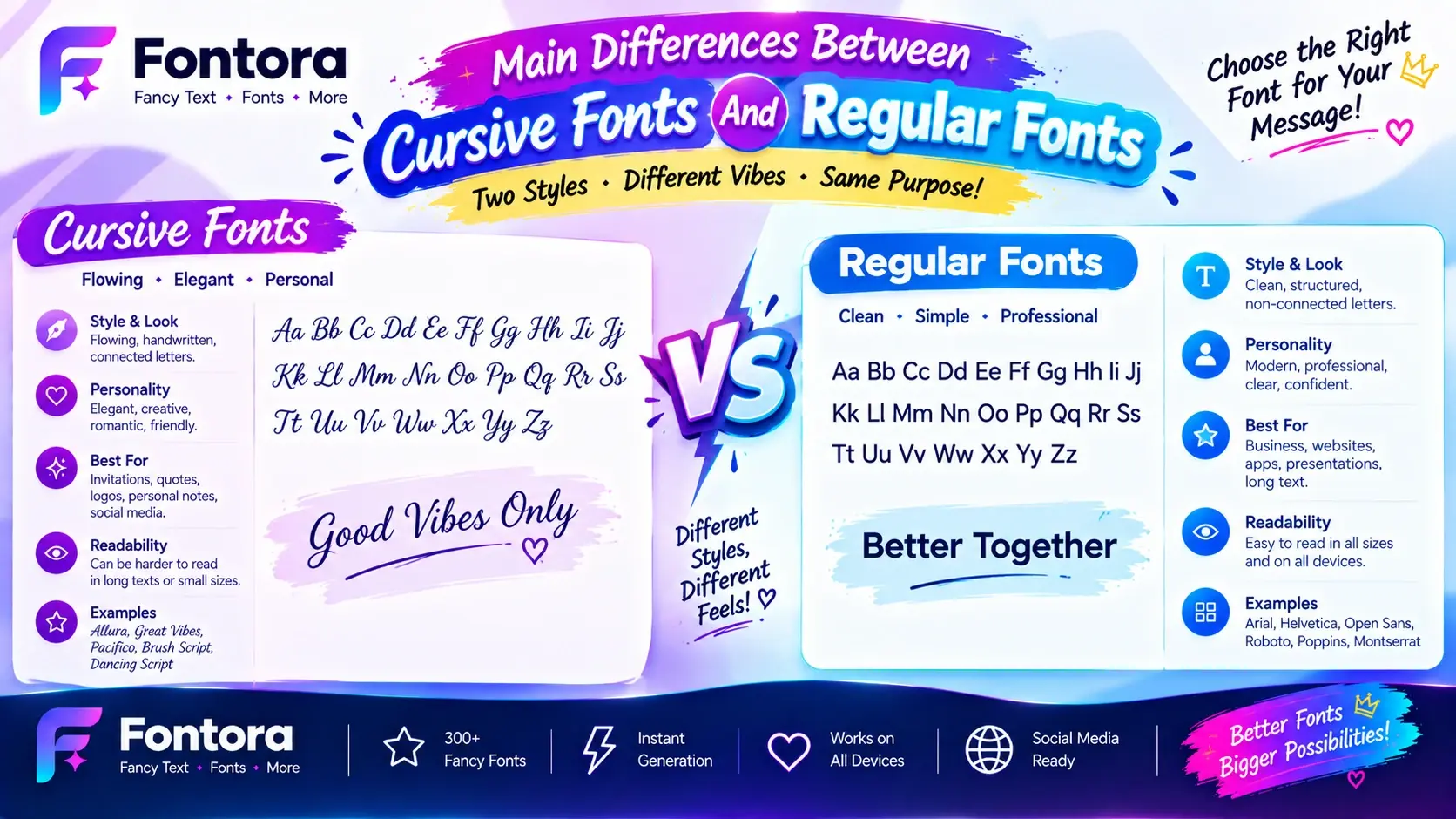
Main Differences Between Cursive Fonts And Regular Fonts
Appearance
Cursive fonts:
Flowing and connected letters
Handwritten appearance
Artistic design
Regular fonts:
Separate letters
Structured shapes
Simple appearance
Purpose
Cursive fonts are mainly used to create visual impact and emotional connection.
Common uses:
Branding
Invitations
Creative designs
Decorative text
Regular fonts are mainly used for information sharing.
Common uses:
Paragraphs
Reports
Websites
Educational content
Readability
Regular fonts usually provide better readability, especially for long content.
They are ideal for:
Blog articles
Website text
Product descriptions
Documentation
Cursive fonts are better for shorter text because complex letter connections can become difficult to read.
Best uses:
Headlines
Logos
Short quotes
Decorative elements
Emotional Impact
Cursive fonts create stronger emotional impressions because they feel more personal and artistic.
They can communicate:
Romance
Luxury
Creativity
Elegance
Regular fonts create feelings of:
Trust
Simplicity
Professionalism
Clarity
When Should You Use Cursive Fonts?
Cursive fonts are a good choice when your goal is to create a unique and memorable design.
Use cursive fonts for:
Logos
Cursive typography can help create a distinctive brand identity.
Example:
A beauty brand using elegant handwritten lettering.
Invitations
Wedding and event invitations often use cursive fonts because they create a premium and emotional feeling.
Social Media Profiles
Creators use cursive fonts for:
Instagram bios
TikTok usernames
Quotes
Highlight covers
Creative Projects
Artists and designers use cursive typography for:
Posters
Artwork
Packaging
Campaign designs
When Should You Use Regular Fonts?
Regular fonts are better when information needs to be understood quickly and easily.
Use regular fonts for:
Website Content
Visitors need comfortable reading experiences.
Blog Articles
Long-form content requires clear typography.
Business Documents
Professional communication benefits from simple fonts.
Applications
Digital interfaces need clean and accessible text.
Can You Combine Cursive And Regular Fonts?
Yes, combining cursive and regular fonts is a common professional design technique.
Designers often use:
Cursive font:
For:
Main logo
Creative heading
Decorative element
Regular font:
For:
Body text
Descriptions
Supporting information
Example:
Heading:
𝓒𝓻𝓮𝓪𝓽𝓲𝓿𝓮 𝓢𝓽𝓾𝓭𝓲𝓸
Body:
Creating modern designs for digital experiences.
This combination creates balance between creativity and readability.
Cursive Fonts vs Regular Fonts For Websites
For websites, the best approach is usually a combination.
Recommended:
Use cursive fonts for:
Logo
Hero heading
Special quotes
Use regular fonts for:
Blog content
Navigation
Product descriptions
A website should always prioritize user experience. Beautiful typography should support communication, not make information harder to access.
Which Font Style Is Better?
Neither cursive nor regular fonts are universally better. The correct choice depends on the purpose.
Choose cursive fonts when you want:
Creativity
Elegance
Personal style
Emotional connection
Choose regular fonts when you need:
Clarity
Professional communication
Easy reading
Universal compatibility
The best designs often combine both styles to create a visually attractive and user-friendly experience.
Understanding the difference between cursive fonts and regular fonts helps designers make smarter typography decisions. Cursive styles add personality and creativity, while regular fonts provide clarity and structure. Using each style in the right place creates stronger branding, better designs, and improved user experiences.
Are Cursive Fonts Good For Websites?
Cursive fonts can add elegance, creativity, and personality to website designs, but they should be used carefully. Unlike regular fonts that focus mainly on readability, cursive typography is designed to create visual impact and emotional connection.
Professional web designers usually combine cursive fonts with clean typography styles to create a balanced user experience. When used correctly, cursive fonts can make a website feel more unique, memorable, and visually appealing.
When Should You Use Cursive Fonts On Websites?
Cursive fonts work best when they are used as decorative elements rather than the main reading font.
They are commonly used for:
Website logos
Hero section headings
Brand slogans
Special quotes
Creative highlights
Decorative text elements
For example, a wedding website may use an elegant cursive heading to create a romantic feeling, while the main content remains in a simple readable font.
Cursive Fonts For Website Logos
A logo is one of the best places to use cursive typography.
Cursive fonts can help brands communicate:
Creativity
Elegance
Luxury
Personal identity
Examples of businesses that may benefit from cursive logos:
Fashion brands
Beauty companies
Handmade businesses
Photography studios
Lifestyle brands
A unique cursive logo can help a business create a memorable visual identity.
Cursive Fonts For Website Headings
Cursive fonts can make headings more attractive and emotionally engaging.
Good uses:
Homepage headlines
Section titles
Promotional messages
Creative statements
Example:
Regular heading:
Welcome To Our Studio
Cursive heading:
𝓦𝓮𝓵𝓬𝓸𝓶𝓮 𝓣𝓸 𝓞𝓾𝓻 𝓢𝓽𝓾𝓭𝓲𝓸
However, headings should remain easy to understand. Extremely decorative cursive styles may reduce clarity.
Why You Should Not Use Cursive Fonts For Long Text
Although cursive fonts look attractive, they are usually not suitable for large blocks of content.
Avoid using cursive fonts for:
Blog paragraphs
Product descriptions
Instructions
Navigation menus
Long articles
Reasons:
Connected letters can slow reading
Decorative strokes may reduce clarity
Small sizes can become difficult to understand
For long-form content, readable serif or sans serif fonts usually provide a better experience.
Best Font Combination With Cursive Fonts
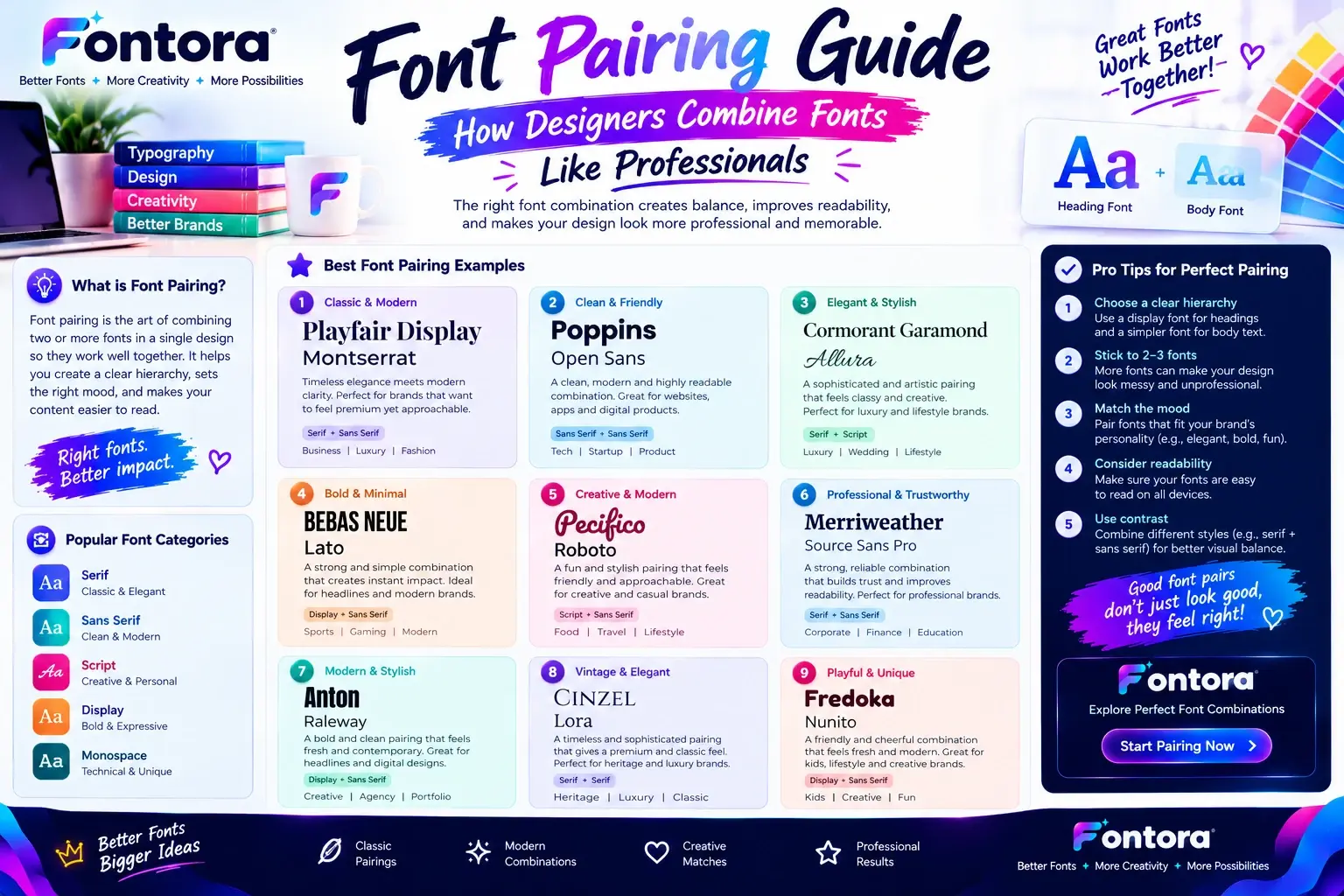
Professional websites often combine cursive fonts with other typography styles. This process, known as font pairing, helps designers balance creativity, readability, and visual hierarchy.
A common combination:
Cursive Font
Used for:
Logo
Main decorative heading
Brand statement
Sans Serif Font
Used for:
Paragraphs
Navigation
Buttons
Product information
Example:
Logo:
𝓛𝓾𝔁𝓾𝓻𝔂 𝓢𝓽𝔂𝓵𝓮
Body:
Modern products designed for everyday living.
This combination creates both creativity and readability.
Cursive Fonts And User Experience
Website typography directly affects user experience. A beautiful website should not only look attractive but also help visitors find and understand information easily.
Good typography improves:
Reading comfort
Content understanding
Navigation experience
Brand perception
When cursive fonts are used correctly, they enhance the design without distracting users.
Cursive Fonts And Website Branding
Typography is an important part of brand identity. The font style a website uses can influence how visitors perceive the business.
Cursive fonts can make brands appear:
More personal
More creative
More premium
More artistic
For example:
A handmade jewelry website may use cursive typography to communicate craftsmanship and uniqueness.
A technology website may avoid decorative cursive fonts and choose modern sans serif typography to represent innovation.
Common Mistakes When Using Cursive Fonts On Websites
Using Cursive Everywhere
A website filled completely with cursive text can become difficult to read.
Better approach:
Use cursive selectively for important visual elements.
Choosing Overly Decorative Fonts
Some cursive styles contain excessive details that reduce readability.
Choose fonts with:
Clear letter shapes
Balanced spacing
Good screen visibility
Ignoring Mobile Users
Many visitors browse websites on smartphones.
Always test cursive fonts on:
Mobile devices
Tablets
Different screen sizes
A font that looks beautiful on desktop may become unclear on smaller screens.
Mixing Too Many Font Styles
Using many different typography styles can make a website look unprofessional.
A good design usually uses:
One main heading style
One body text style
One optional decorative style
Best Practices For Using Cursive Fonts On Websites
Follow these guidelines:
Use Cursive For Short Text
Best for:
Titles
Logos
Quotes
Short messages
Maintain Readability
Always ensure visitors can easily understand the content.
Match The Brand Personality
Choose a cursive style that represents your business.
Combine With Simple Fonts
Balance decorative typography with readable fonts.
Test Across Devices
Check how the font appears on different screens.
Are Cursive Fonts SEO Friendly?
Cursive fonts themselves do not directly improve search engine rankings. Search engines focus more on content quality, structure, user experience, and technical SEO.
However, good typography can indirectly support SEO by improving:
User experience
Engagement
Time spent on pages
Brand perception
A website with attractive and readable design creates a better experience for visitors.
Cursive fonts can be an excellent choice for websites when used strategically. They add personality, elegance, and creativity to important design elements while readable fonts handle the main information. The best website typography combines visual beauty with a smooth user experience.
How To Create Cursive Text With Fontora
Creating cursive text is a simple way to transform ordinary words into elegant and creative typography. With a cursive text generator, users can instantly convert normal text into stylish handwritten designs without needing advanced graphic design skills or professional software.
Fontora helps users explore different cursive styles and create attractive text for social media profiles, branding projects, digital designs, and creative content.
Step 1: Enter Your Text
The first step is choosing the text you want to transform into a cursive style.
You can create cursive versions of:
Names
Usernames
Brand names
Social media bios
Quotes
Headlines
Creative messages
Examples:
Normal text:
Creative Studio
Personal name:
Alex Designs
Brand message:
Luxury Collection
Start with meaningful words that represent your identity, purpose, or project.
Step 2: Select A Cursive Font Style
After entering your text, choose a cursive style that matches your design goal.
Different cursive styles create different impressions.
Elegant Cursive
Best for:
Luxury brands
Wedding designs
Premium projects
Example:
𝓔𝓵𝓮𝓰𝓪𝓷𝓽 𝓢𝓽𝔂𝓵𝓮
Handwritten Cursive
Best for:
Personal branding
Creator profiles
Casual designs
Example:
𝓟𝓮𝓻𝓼𝓸𝓷𝓪𝓵 𝓣𝓸𝓾𝓬𝓱
Calligraphy Cursive
Best for:
Invitations
Certificates
Decorative designs
Example:
𝓑𝓮𝓪𝓾𝓽𝓲𝓯𝓾𝓵 𝓛𝓮𝓽𝓽𝓮𝓻𝓼
Step 3: Generate Your Cursive Text
A cursive text generator converts regular characters into styled text designs.
The process is simple:
Enter your text
The generator creates different cursive variations
Choose your preferred design
Copy the final result
Example:
Input:
Beautiful Design
Output:
𝓑𝓮𝓪𝓾𝓽𝓲𝓯𝓾𝓵 𝓓𝓮𝓼𝓲𝓰𝓷
The meaning stays the same while the visual appearance becomes more creative.
Step 4: Copy And Use Your Cursive Text
After creating your preferred style, you can copy the text and use it across different platforms.
Common uses include:
Social Media Profiles
Use cursive text for:
Instagram bios
TikTok usernames
Facebook posts
Pinterest designs
Example:
✨ 𝓒𝓻𝓮𝓪𝓽𝓲𝓿𝓮 𝓜𝓲𝓷𝓭
Gaming Profiles
Create unique usernames with elegant or decorative cursive styles.
Example:
🎮 𝓛𝓮𝓰𝓮𝓷𝓭 𝓟𝓵𝓪𝔂𝓮𝓻
Branding Projects
Businesses can use cursive text ideas for:
Logo concepts
Product names
Marketing designs
Step 5: Check Readability Before Using
A beautiful cursive style should still be easy to understand.
Before publishing, check:
Are letters clear?
Does the text display correctly?
Is the design suitable for your audience?
Does it match your brand style?
Avoid overly complicated cursive styles that make words difficult to recognize.
Why Use Fontora For Cursive Text?
Fontora makes creating stylish typography simple by allowing users to experiment with different text styles quickly.
Users can create:
Elegant cursive names
Stylish profile bios
Creative captions
Decorative text designs
Unique branding ideas
Instead of manually searching for special characters, Fontora provides a faster way to explore different typography options.
Tips For Better Cursive Text Designs
Choose Short And Meaningful Text
Cursive styles work best with:
Names
Short phrases
Headlines
Brand messages
Long sentences may become difficult to read.
Match Style With Purpose
Choose:
Elegant cursive for luxury designs.
Handwritten cursive for personal projects.
Calligraphy styles for special events.
Modern cursive for digital content.
Keep The Design Balanced
Avoid adding too many:
Symbols
Emojis
Decorative elements
A clean cursive design usually creates a stronger impression.
Where Can You Use Fontora Cursive Text?
Cursive text created with Fontora can be used for:
Social media profiles
Creative usernames
Digital invitations
Branding inspiration
Personal designs
Online communities
The flexibility of cursive typography makes it useful for both personal and professional purposes.
Creating cursive text is an easy way to add creativity and personality to digital communication. With Fontora, users can explore different cursive styles, generate beautiful text, and create designs that feel more unique and memorable.
Conclusion: Use Cursive Fonts To Add Creativity And Personality To Designs
Cursive fonts are more than just decorative text styles. They are a powerful typography choice that helps designers, brands, and creators communicate emotions, build visual identity, and create memorable experiences. With their flowing letter shapes and handwritten appearance, cursive fonts bring a personal and artistic touch to digital and creative projects.
From elegant logos and luxury branding to wedding invitations, social media profiles, and creative designs, cursive typography can make content feel more unique and engaging. Different cursive styles, including traditional cursive, modern cursive, brush lettering, and calligraphy fonts, offer different visual impressions for different purposes.
The best use of cursive fonts comes from choosing the right style for your audience, platform, and design goals. While cursive typography works beautifully for headlines, logos, and decorative elements, readable fonts should be used for longer content to maintain a smooth user experience.
Whether you are creating a personal brand, designing social media content, or exploring creative typography ideas, the right cursive font can transform simple text into an elegant and meaningful visual element.
Frequently Asked Questions About Cursive Fonts
What are cursive fonts?
Cursive fonts are typography styles inspired by handwritten lettering where characters often have flowing strokes and connected shapes. They are commonly used in logos, invitations, branding, social media designs, and creative projects to create an elegant, artistic, and personal appearance.
Are cursive fonts the same as handwriting?
Cursive fonts are inspired by handwriting, but they are digital versions created by typography designers. Traditional handwriting is created manually, while cursive fonts are designed as digital typefaces that can be used in websites, design software, and online platforms.
What is the difference between cursive fonts and script fonts?
Cursive fonts are a type of script typography that focuses on connected handwritten letters. Script fonts include a wider range of handwriting-inspired styles, including formal calligraphy, brush lettering, and decorative writing styles.
Where are cursive fonts commonly used?
Cursive fonts are commonly used in:
Logo designs
Wedding invitations
Fashion branding
Beauty products
Social media profiles
Creative artwork
Personal branding
They are especially useful when a design needs elegance, creativity, or a personal touch.
Are cursive fonts good for websites?
Cursive fonts can be effective for websites when used in specific areas such as logos, headings, and decorative sections. They are usually not recommended for long paragraphs because highly detailed cursive styles can reduce readability.
How can I create cursive text online?
You can create cursive text online by using a cursive text generator. Enter your desired words, choose a cursive style, generate the design, and copy the result for use in social media profiles, usernames, captions, or creative projects.
Are cursive fonts free to use?
Many cursive fonts and cursive text generators are available for free. However, some professional font files used for commercial branding may require a license depending on the font creator and usage rights.
Which cursive font style is best for logos?
The best cursive font style for logos depends on the brand personality. Elegant cursive and calligraphy fonts work well for luxury brands, beauty companies, fashion businesses, and creative brands that want a premium and artistic identity.
Can I use cursive fonts on Instagram and TikTok?
Yes, cursive-style text can be used on platforms such as Instagram and TikTok. Many users create stylish usernames, bios, and captions using Unicode-based cursive characters that can be copied and pasted easily.
Why are cursive fonts popular in design?
Cursive fonts are popular because they create a human, creative, and emotional feeling. Their handwritten appearance helps brands and creators make designs feel more unique, memorable, and visually attractive.